


Reckitt Benckiser Stock Leads UK Staples Screen As Energy Bills Rise
Rising UK energy bills are squeezing household budgets, with forecast domestic energy debt in Great Britain heading toward £7b and an Ofgem price cap increase of 4% expected from October. That pressure on wallets is bad news for some sectors, yet it also pushes investors to look more closely at essential consumer staples that people still prioritise. This article walks through three UK stocks from our screener that appear relatively well placed against this backdrop and explains how the current energy bill story ties into their investment case.
The three stocks below are just a starting sample from this idea, and the full screen surfaced 12 more UK consumer staples companies with equally compelling stories that are not covered here. To go beyond this snapshot, head straight into the UK Essential Consumer Staples Resilient to Energy-Bill Squeeze screener to identify, compare, and analyze the highest conviction opportunities in this theme.
Reckitt Benckiser Group (LSE:RKT)
Reckitt Benckiser Group is a £32.7b UK consumer staples company focused on everyday health, hygiene, and home products that households tend to prioritise even when energy bills rise. Its portfolio ranges from Dettol, Lysol, Durex and Nurofen to Finish, Vanish and infant nutrition brands like Enfamil, giving broad exposure to products that sit close to the top of the shopping list when budgets tighten. Revenue is spread across Core Reckitt in Europe (£3.4b), North America (£2.5b) and Emerging Markets (£4.4b), alongside £2.1b from Mead Johnson Nutrition.
For investors looking at resilient staples, Reckitt Benckiser Group offers a mix of globally recognised brands, a 4.1% dividend and solid profitability that has recently included a net profit margin above 20%. At the same time, high debt, legal exposures and slower expected earnings over the next few years mean the story is not risk free, especially if energy driven cost pressure persists. The interest lies in whether strong cash generation, cost savings and ongoing share buybacks can keep returns attractive despite those headwinds. That is where the investment debate on Reckitt really starts to get interesting.
Reckitt Benckiser Group’s rich brand portfolio and 4.1% dividend can mask how much hinges on cash generation, cost savings and buybacks. Before assuming the story is simple income plus defence, review the 5 key rewards and 3 important warning signs (1 is major!)

Tate & Lyle (LSE:TATE)
Tate & Lyle is a London headquartered food ingredients company that supplies sweeteners, fibres and functional starches into everyday products such as soft drinks, dairy, bakery and snacks. This keeps it tied to relatively steady demand for food even when UK households are squeezed by higher energy bills. The group generates about £1.0b of revenue from the Americas, £636 million from Europe, Middle East and Africa, and £375 million from Asia Pacific, giving it a broad global footprint across food and beverage customers. With a market cap of about £2.5b, Tate & Lyle sits in the mid cap bracket of the UK consumer staples space.
For investors watching the impact of rising UK energy bills, Tate & Lyle offers an indirect way to tap into demand for food and drink that people still buy when other spending is cut back, backed by a portfolio of speciality ingredients and a growing solutions focus. The attraction is that earnings have recently moved ahead faster than sales and analysts see scope for further margin improvement, yet the stock trades at a large discount to some valuation estimates. This could appeal to investors willing to do more work on the balance sheet and dividend cover. The other side of the story is real risk, including an auditor going concern flag, a sizeable one off loss and debt that leans on external funding, which means resilience is not a given and careful due diligence matters.
Tate & Lyle’s earnings momentum and discount to some valuation estimates hint that the market may be underpricing the full story. Before you decide how that balance of opportunity and risk stacks up, review the 3 key rewards and 3 important warning signs (1 is major!)
Marks and Spencer Group (LSE:MKS)
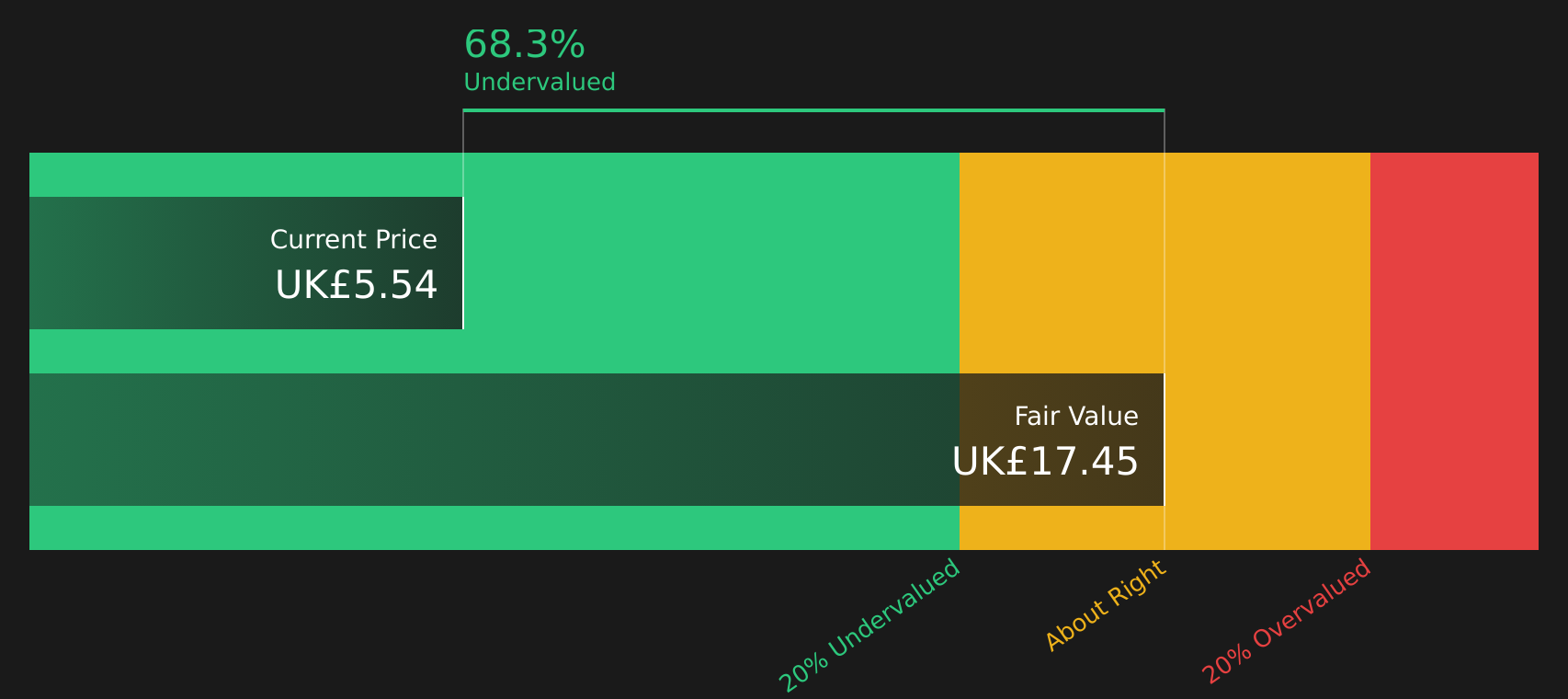
Marks and Spencer Group is a UK based retailer that combines a large food and essentials offer with clothing, home and beauty, which ties directly into this screener’s focus on groceries and household products that tend to hold up when energy bills bite. Food is the engine of the group, generating about £9.7b of revenue, with Ocado contributing £3.2b, Fashion, Home & Beauty £3.8b and International £543 million, giving a broad mix across everyday baskets and discretionary categories. With a market cap of about £7.9b, Marks and Spencer Group is a sizeable UK consumer stock that many households already know from their weekly shop.
Investors looking at Marks and Spencer Group in the context of rising UK energy bills are really weighing two things. On one side, there is a sizeable food and Ocado partnership business that taps into regular grocery demand and an ongoing push to improve stores, digital channels and the supply chain. This could support earnings as more shoppers trade down to value focused staples. On the other side, profit margins are thin at 1.5%, Ocado Retail is loss making and the group relies on external borrowing, so higher costs or weaker consumer confidence can quickly squeeze returns. That mix of everyday resilience, ongoing transformation and real execution risk is what makes Marks and Spencer Group worth a closer look for this theme.
Marks and Spencer Group’s food engine and Ocado link could be masking a different story on risk, margins and debt. Get the full picture before the next move with the 2 key rewards and 2 important warning signs

Seeking Alternatives Before The Crowd?
Fresh stock ideas can move from quiet to fully priced quickly. Use this window while screens still catch companies under the radar for now and get in early.
- Catch early momentum in cash rich companies before attention spikes by scanning the curated list of solid balance sheet and fundamentals (19 results) that focuses on financial strength while it still might be overlooked.
- Explore potential upside in smaller AI stocks before enthusiasm significantly affects valuations by working through the focused 5 AI small caps list while the numbers still do most of the talking.
- Target possible income opportunities in companies with sizeable yields using the hand picked 6 dividend fortresses and decide which payouts still look sustainable enough to deserve a closer look.
This article by Simply Wall St is general in nature. We provide commentary based on historical data and analyst forecasts only using an unbiased methodology and our articles are not intended to be financial advice. It does not constitute a recommendation to buy or sell any stock, and does not take account of your objectives, or your financial situation. We aim to bring you long-term focused analysis driven by fundamental data. Note that our analysis may not factor in the latest price-sensitive company announcements or qualitative material. Simply Wall St has no position in any stocks mentioned.
Have feedback on this article? Concerned about the content? Get in touch with us directly. Alternatively, email editorial-team@simplywallst.com