


BlackRock Stock and 2 Financials Tied to Rising Demand for Cash Alternatives
Long-term government bond yields are surging while central banks send mixed signals, and that is pulling investor attention back toward short-duration cash and ultra short fixed income products. This shift can change how cash is parked and where liquidity flows, which may create fresh openings or new risks for certain stocks exposed to this news. This article discusses three such stocks and explains why each one may merit closer analysis at this time.
The stocks covered below are just a starting sample, and the full screen surfaced 12 more companies with equally compelling cash and liquidity narratives that are not included in this article. To identify and analyze the highest conviction short-duration cash and ultra short fixed income product providers, head straight into the Short-Duration Cash and Ultra-Short Fixed-Income Product Providers screener.
Bank of New York Mellon (BNY)
Overview: Bank of New York Mellon is a global custody and asset servicing bank that looks after client assets, processes transactions, and provides cash management, money-market and short-duration investment solutions for institutional and wealth clients. Its platform connects central banks, asset managers, insurers, corporations and wealth clients to liquidity, payments and investment products across major markets.
Operations: Bank of New York Mellon generates most of its revenue from Securities Services at about US$10.5b, followed by Market and Wealth Services at about US$7.4b, Investment and Wealth Management at about US$3.4b, with a small contribution from Other at about US$61 million.
Market Cap: US$111.5b
Bank of New York Mellon may be relevant to investors who pay attention to where institutional cash is allocated when short-term yields rise. As a custody and cash-management bank, it is closely linked to flows into money-market and ultra-short fixed income products, and it is building out digital asset and tokenized money market fund capabilities that could influence how clients hold liquidity. At the same time, the business still depends on healthy markets, faces fee pressure, and is in the process of realizing the full benefits from large technology investments. For readers interested in how a large, balance-sheet-light institution might operate in an environment of higher long-term yields and more complex liquidity needs, this stock can be a useful case study.
Bank of New York Mellon's push into digital assets and tokenized money market funds could reshape how institutions hold cash, yet the real twist sits in the 3 key rewards and 1 important warning sign

Build your own short-duration cash shortlist
Bank of New York Mellon and the two other stocks in this article all came from applying a focused screener to short-duration cash and liquidity themes. Use our customisable Screener to mix filters like valuation, balance sheet strength, risks and dividends, or skip straight to our curated Investing Ideas for ready-made starting points.
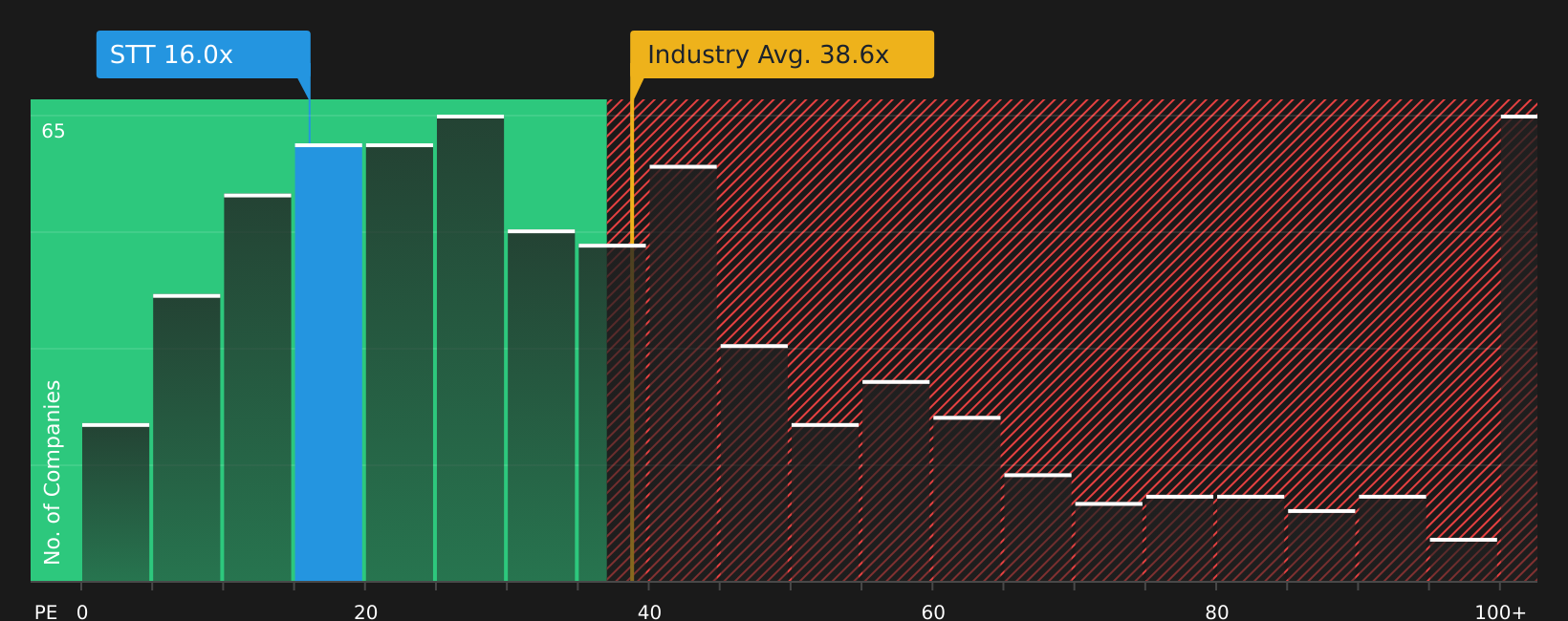
State Street (STT)
Overview: State Street is a Boston based custody bank and asset manager that runs core market plumbing for institutional investors, from safekeeping and accounting for funds to managing cash, money market and short duration fixed income strategies that help clients handle day to day liquidity needs.
Operations: State Street generates about US$12.1b of revenue from Investment Servicing and US$3.0b from Investment Management, with roughly US$8.5b earned in the United States and US$6.6b from non U.S. markets.
Market Cap: US$53.0b
State Street deserves a close look if you care where institutional cash goes when long term bond yields swing around. Its scale in custody, ETFs and cash strategies, together with the Alpha platform that ties portfolio management, trading and data together, gives it a front row seat on liquidity flows when investors shift into money market and ultra short products. At the same time, fee pressure in passive funds, rising regulatory demands and rapid changes in settlement technology all test how well the bank protects margins and keeps its services relevant. For investors who want exposure to cash and liquidity trends without ignoring these execution risks, State Street offers a detailed story worth unpacking further.
State Street’s large servicing and ETF footprint can provide an early read on how liquidity flows are shifting, yet the real story only comes into focus in the 5 key rewards and 1 important warning sign
BlackRock (BLK)
Overview: BlackRock is a global investment manager that runs a wide range of funds and ETFs for institutions and individuals, including large money market funds and ultra short bond ETFs that many investors use as cash and liquidity tools when short term yields are high. It also provides risk management and advisory services alongside equity, fixed income, real estate, multi asset and alternative investment products across major markets.
Operations: BlackRock generates about US$27.3b of revenue from its Asset Management business, with roughly US$18.0b coming from the Americas, US$8.0b from Europe and US$1.3b from Asia Pacific.
Market Cap: US$186.4b
For investors focused on cash and short duration themes, BlackRock offers a broad toolkit that ranges from traditional money market funds and bond ETFs to newer tokenized treasury and money market products aimed at on chain liquidity. In periods when long term bond yields rise and concerns about government debt increase, some investors may prefer shorter duration assets. In that context, BlackRock’s scale in liquidity products, ETF distribution and platforms such as Aladdin may be especially relevant. At the same time, fee pressure, a funding mix that relies on external sources rather than deposits, and ongoing spending on technology and alternatives all create earnings and execution risk. For those looking to understand how a large asset manager might channel flows into cash, treasuries and tokenized liquidity, BlackRock can be a useful case study.
BlackRock’s push into tokenized treasuries and on chain liquidity is accelerating, yet many investors still treat it like a plain ETF giant. Read the analyst forecasts for BlackRock to see what that expansion could really mean for risk and reward next.

Seeking Alternatives Before The Crowd?
Fresh stock ideas can move quickly when momentum builds and breakout stories spread once they are noticed by the crowd. Scan curated themes that remain under the radar for now and consider them before they become widely followed.
- Identify early-stage pricing power in niche businesses by scanning the 50 high quality undervalued stocks before valuations change and the most attractive entry points become less accessible.
- Track structural shifts in healthcare by following companies in the 42 healthcare AI stocks while they are still building momentum and broader attention is limited.
- Monitor long-cycle demand trends by checking the 9 top copper producer stocks and see which producers are gaining visibility as new headlines increase awareness.
This article by Simply Wall St is general in nature. We provide commentary based on historical data and analyst forecasts only using an unbiased methodology and our articles are not intended to be financial advice. It does not constitute a recommendation to buy or sell any stock, and does not take account of your objectives, or your financial situation. We aim to bring you long-term focused analysis driven by fundamental data. Note that our analysis may not factor in the latest price-sensitive company announcements or qualitative material. Simply Wall St has no position in any stocks mentioned.
Have feedback on this article? Concerned about the content? Get in touch with us directly. Alternatively, email editorial-team@simplywallst.com