


Philip Morris (PM) Stock Looks Below Fair Value While Earnings Look Full
Philip Morris International has delivered a 135.5% total return over the past five years, yet current checks suggest the stock is not an obvious bargain, even as an intrinsic value estimate based on a Discounted Cash Flow (DCF) points to a discount to the market price.
- Over the past 5 years, Philip Morris International has returned 135.5%, which puts recent performance in strong territory for long term holders.
- Growth expectations around smoke free products such as nicotine pouches can support the long term cash flow story. However, regulatory scrutiny of these products may limit how much value investors are willing to assign to that shift.
- Philip Morris International scores 2 out of 6 on the broader valuation checks, which leans more towards expensive than clearly cheap even though the Discounted Cash Flow (DCF) estimate suggests the stock trades about 16.9% below intrinsic value.
For investors, the debate is whether Philip Morris International's share price already reflects most of its long term transition story, or if the discount to intrinsic value still offers a margin of safety.
Is Philip Morris International a Bargain on Cash Flow?
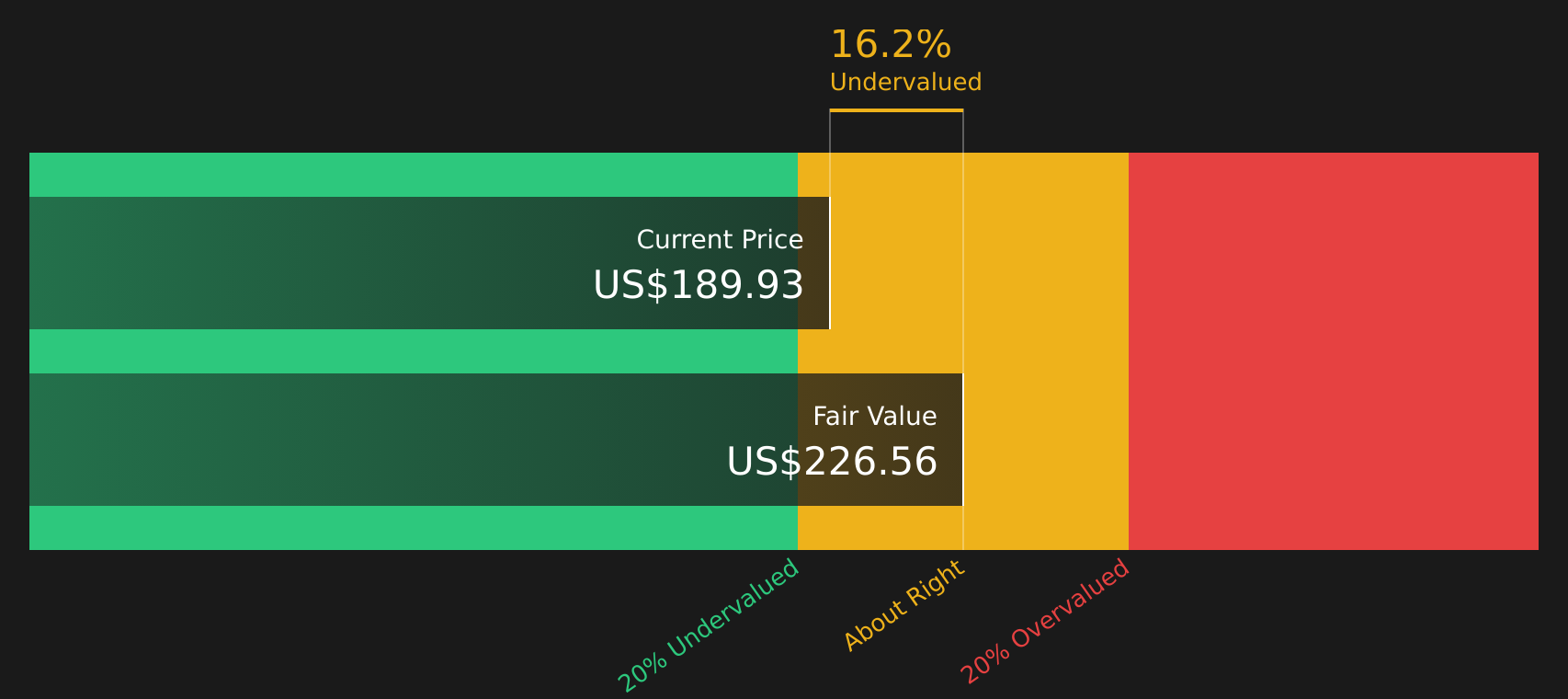
The Discounted Cash Flow (DCF) method estimates what Philip Morris International could be worth based on the cash it is expected to generate for shareholders. The model uses a 2 Stage Free Cash Flow to Equity approach, starting from latest twelve month free cash flow of about $12.7b and assuming that cash flows grow over time rather than shrink.
On these cash flow assumptions, the DCF points to an estimated intrinsic value of about $226 per share, which implies the stock trades at a 16.9% discount and therefore appears undervalued within this framework. Recent focus on nicotine pouches as a potential growth area helps explain why the model assumes ongoing cash generation, even though regulators are paying closer attention to these products. Because nicotine pouches are drawing more scrutiny in key markets, this may help explain why the share price currently sits below the DCF estimate.
Putting this together, Philip Morris International currently screens as undervalued relative to the cash flows implied by the DCF model.
Our Discounted Cash Flow (DCF) analysis suggests Philip Morris International is undervalued by 16.9%. Track this in your watchlist or portfolio, or discover 50 more high quality undervalued stocks.
Does Philip Morris International Look Fairly Valued on Earnings?
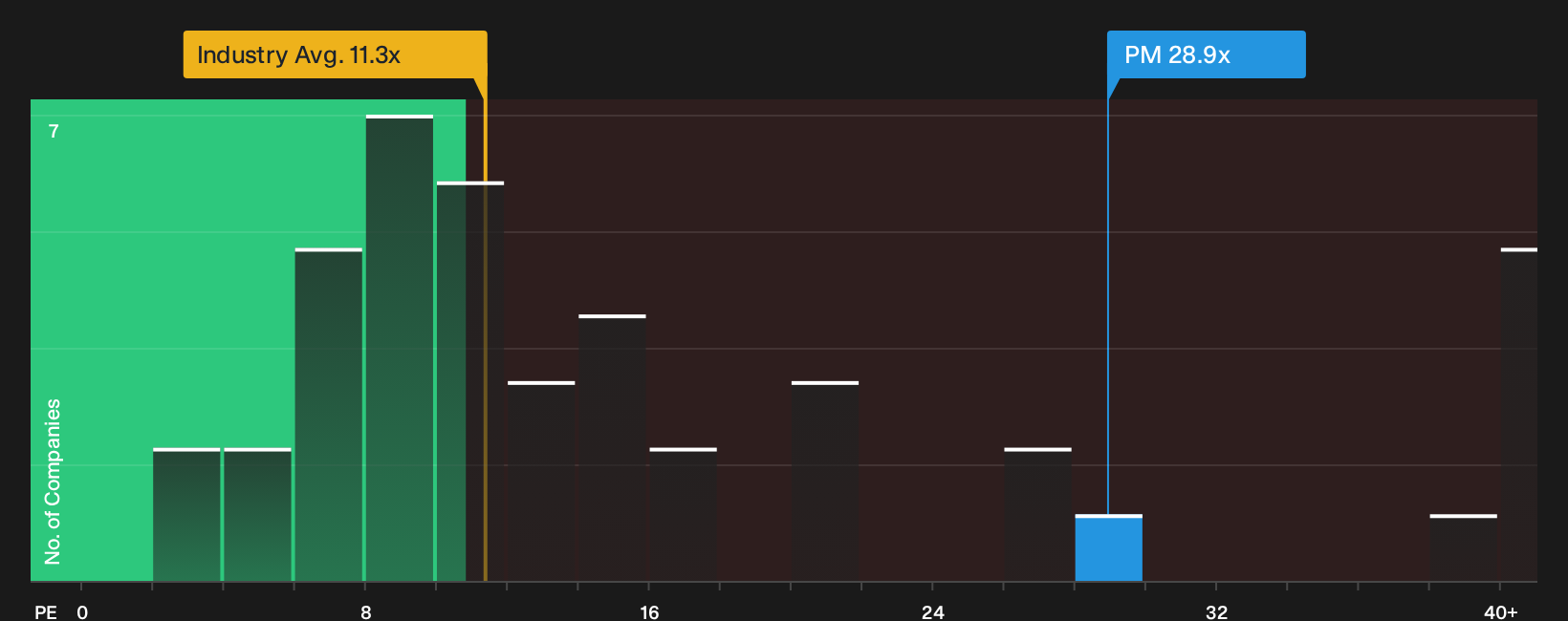
P/E is a useful lens for Philip Morris International because earnings remain a key focus for income oriented investors in mature consumer businesses. The stock currently trades on a P/E of about 27.0x. That is higher than both the Tobacco industry average of roughly 11.8x and the broader peer group average of about 18.5x, which suggests investors are willing to pay a premium for the earnings stream here.
The model based fair P/E ratio for Philip Morris International is about 27.2x. That is very close to the current market multiple, so the shares look broadly aligned with what the model implies given the company’s profile. In other words, even with a premium to the sector’s headline P/E, the stock does not screen as especially cheap or expensive when compared with this tailored fair value multiple.
Overall, Philip Morris International looks roughly fairly valued on its current P/E multiple.
See what the numbers say about this price — find out in our valuation breakdown.
The Philip Morris International Narrative: What Would Justify Today's Price?
Simply Wall St Narratives for Philip Morris International give you a structured way to connect the valuation questions above with clear views on what might happen to the business. Each narrative explains what would need to be true about Philip Morris International's future growth, margins and earnings for the stock to be worth materially more or less than today. Each narrative also links its figures to a concrete view of how growth, margins and risks could develop, which you can revisit as new information emerges.
Community views on Philip Morris International are split between confidence in the smoke free shift and concern that regulation and capital needs could restrain the story.
Bull case: roughly fairly valued
"The accelerating global adoption of smoke-free alternatives driven by increasing health awareness and regulatory moves away from combustibles is fueling strong double-digit volume and margin growth in PMI's IQOS, ZYN, and VEEV platforms..."
Read the full Bull Case to see why Philip Morris International could be undervalued
Bear case: 7% overvalued
"The regulatory environment is growing increasingly complex and adverse, with new or heightened restrictions and taxation frameworks on both combustible and smoke-free products such as evolving EU excise directives and the lack of effective countermeasures against the illicit trade posing material risks to compliance costs and future operating margins..."
Read the full Bear Case to see why Philip Morris International could be overvalued
Do you think there's more to the story for Philip Morris International? Head over to our Community to see what others are saying!
The Bottom Line
For Philip Morris International, the Discounted Cash Flow (DCF) work suggests intrinsic value sits meaningfully above the current share price, while the P/E view signals the stock is already priced about right relative to its earnings profile. That split, together with a weak broader valuation score, leaves the DCF signal as only one piece of the puzzle rather than a clear green light. The real hinge from here is whether smoke free products can deliver durable cash flows without regulatory pushback eroding margins or requiring heavier reinvestment. How that balance plays out will likely decide whether the current discount is an opportunity or a value trap.
This article by Simply Wall St is general in nature. We provide commentary based on historical data and analyst forecasts only using an unbiased methodology and our articles are not intended to be financial advice. It does not constitute a recommendation to buy or sell any stock, and does not take account of your objectives, or your financial situation. We aim to bring you long-term focused analysis driven by fundamental data. Note that our analysis may not factor in the latest price-sensitive company announcements or qualitative material. Simply Wall St has no position in any stocks mentioned.
Have feedback on this article? Concerned about the content? Get in touch with us directly. Alternatively, email editorial-team@simplywallst.com