


Ashland (ASH) Is Up 9.4% After Reaffirming 2026 Sales Outlook And Adding Capital Allocation Committee
- Ashland Inc. reported past third-quarter 2026 results showing sales of US$497 million and net income of US$16 million, a shift from a very large net loss a year earlier, while also reaffirming full-year sales guidance of US$1.84 billion to US$1.87 billion.
- Alongside the earnings update, Ashland added two independent directors and formed a Capital Allocation Advisory Committee in cooperation with a significant shareholder, signaling increased focus on how it deploys cash and shapes long-term priorities.
- We’ll now explore how Ashland’s reaffirmed full-year sales guidance may influence its existing investment narrative and future performance expectations.
Find 55 companies with promising cash flow potential yet trading below their fair value.
Ashland Investment Narrative Recap
To own Ashland, you need to believe its specialty ingredients focus and resilient end markets can translate into steadier earnings, despite recent volatility and high valuation multiples. The key short term catalyst remains execution on its margin and cash flow goals, while the biggest risk is that structurally softer demand or pricing in core additives leaves revenue growth stuck at modest levels. The latest quarter and reaffirmed sales guidance do not materially change those near term swing factors.
The most relevant update here is Ashland’s reaffirmed full year sales guidance of US$1.835 billion to US$1.870 billion. Holding that range after a return to profitability gives more context for the cost savings and innovation catalysts investors are watching, but it also highlights the risk that revenue growth could stay relatively low even as margins improve, which matters if you are weighing today’s earnings power against the current price.
Yet beneath the improving numbers, one risk investors should be aware of is that Ashland’s heavy exposure to premium consumer and life sciences customers could...
Read the full narrative on Ashland (it's free!)
Ashland's narrative projects $2.0 billion revenue and $186.2 million earnings by 2029.
Uncover how Ashland's forecasts yield a $73.64 fair value, in line with its current price.
Exploring Other Perspectives
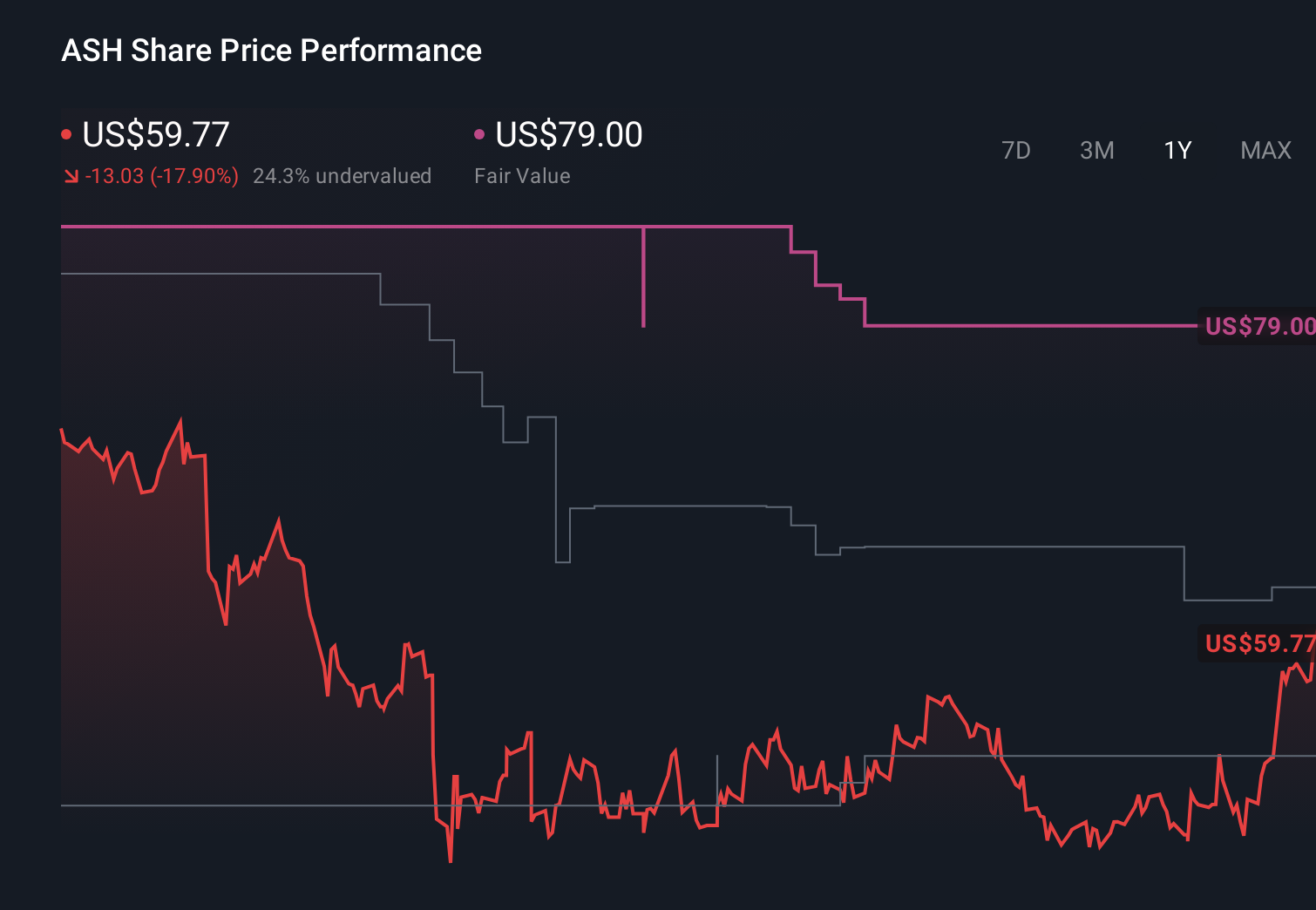
Some of the lowest analysts were assuming only about 3 percent annual revenue growth and earnings near US$200 million by 2029, which shows how differently you and others might view Ashland’s cost pressures and competition after this guidance update.
Explore 2 other fair value estimates on Ashland - why the stock might be worth as much as 21% more than the current price!
Reach Your Own Conclusion
Disagree with existing narratives? Extraordinary investment returns rarely come from following the herd, so go with your instincts.
- A great starting point for your Ashland research is our analysis highlighting 3 key rewards and 2 important warning signs that could impact your investment decision.
- Our free Ashland research report provides a comprehensive fundamental analysis summarized in a single visual - the Snowflake - making it easy to evaluate Ashland's overall financial health at a glance.
Searching For A Fresh Perspective?
Our daily scans reveal stocks with breakout potential. Don't miss this chance:
- The future of work is here. Discover the 35 top robotics and automation stocks leading the charge in AI-driven automation and industrial transformation.
- The best AI stocks today may lie beyond giants like Nvidia and Microsoft. Find the next big opportunity with these 16 smaller AI-focused companies with strong growth potential through early-stage innovation in machine learning, automation, and data intelligence that could fund your retirement.
- We've uncovered the 9 dividend fortresses yielding 5%+ that don't just survive market storms, but thrive in them.
This article by Simply Wall St is general in nature. We provide commentary based on historical data and analyst forecasts only using an unbiased methodology and our articles are not intended to be financial advice. It does not constitute a recommendation to buy or sell any stock, and does not take account of your objectives, or your financial situation. We aim to bring you long-term focused analysis driven by fundamental data. Note that our analysis may not factor in the latest price-sensitive company announcements or qualitative material. Simply Wall St has no position in any stocks mentioned.
Have feedback on this article? Concerned about the content? Get in touch with us directly. Alternatively, email editorial-team@simplywallst.com