


As the U.S. Celebrates its 250th Year, the National Parks Face Unfinished Business
A landmark fund tackled thousands of repairs on public landscapes, but work remains
WASHINGTON, July 31, 2026 /PRNewswire/ -- Marcia Argust leads The Pew Charitable Trusts' work to restore U.S. national parks.
Stand at the edge of the Tidal Basin in Washington, D.C., today, and you'll have a hard time finding evidence of aging infrastructure and degradation. Just five years ago, the original seawall—constructed at the end of the19th century—had sunk more than five feet in some areas, inundating walkways and repeatedly exposing the roots of the iconic cherry trees to damaging saltwater. Today, a rebuilt seawall features deeper foundations, a reoriented and wider pedestrian walkway, and design elements intended to better withstand sea-level rise—and nearly 270 new cherry trees have been planted along the basin's edge.
The Tidal Basin's decline reflected a broader problem. Across the country's national parks and public spaces, long-standing maintenance needs and outdated facilities had built up over decades as the U.S. Forest Service (USFS) and Interior Department agencies—the Bureau of Land Management (BLM), National Park Service (NPS), and U.S. Fish and Wildlife Service (FWS)—struggled to keep pace amid aging infrastructure and chronic underfunding.
In response, Congress created the National Parks and Public Land Legacy Restoration Fund (LRF) as part of the bipartisan Great American Outdoors Act (GAOA) that President Donald Trump signed into law in 2020. The fund provided more than $9 billion over five years—financed by mineral revenue from federal lands and waters, rather than taxpayer dollars—to tackle priority repairs and updates within national parks and forests, wildlife refuges, BLM areas, and Bureau of Indian Education (BIE) schools.
Unfortunately, the fund expired in August 2025. And although the LRF supported tremendous progress, today, the combined deferred maintenance backlog across the federal land agencies is estimated at over $35 billion. As the nation celebrates its 250th anniversary, President Trump and Congress have an opportunity to renew the fund and support the continued repair and restoration of the United States' most beloved landscapes and historic places.
The Legacy Restoration Fund delivered
Collectively, federal land agencies manage more than 250,000 historic sites, roads and bridges, trails, wastewater treatment systems, water and electrical utilities, battlefields, visitor facilities, campgrounds, memorials, boat ramps, and other assets. Additionally, BIE manages 183 elementary and secondary schools, dormitories, and off-reservation boarding schools that serve more than 45,000 students.
Aging and crumbling assets can limit visitor access, disrupt recreation, and reduce spending in nearby communities that depend on tourism for their economic health. During its five-year lifespan, the LRF supported more than 1,500 Interior Department and U.S. Forest Service projects across all 50 states and D.C., reaching nearly every corner of the country, for example:
- In Arkansas, at the Dale Bumpers White River National Wildlife Refuge, the FWS repaired levees to enhance wildlife habitat, as well as boat ramps, bridges, parking lots, and other assets to improve the visitor experience.
- At Glacier National Park in Montana, the NPS replaced an outdated water distribution system to ensure water for safe drinking and fire protection.
- The BLM replaced Alaska's only bridge providing access to Sourdough Creek Campground along the Gulkana Wild and Scenic River.
- A $26.2 million investment updated the Tuolumne Meadows Campground in Yosemite National Park in California.
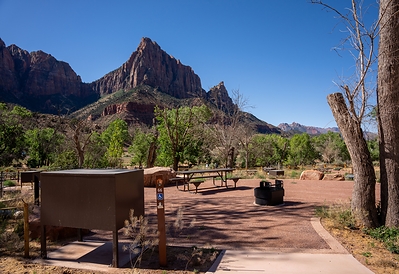
- In Utah, Zion National Park recently reopened the South Campground, complete with renovated campsites, bathrooms, pedestrian walkways, bike paths, and parking.
- In Wisconsin's Chequamegon‑Nicolet National Forest, LRF funding facilitated the replacement of a failing snowmobile trail bridge that could no longer support grooming equipment—an upgrade important to local winter tourism economies.
LRF-supported projects such as these benefit hikers, hunters, anglers, paddlers, equestrians, off‑road vehicle riders, and many other outdoor enthusiasts, while improving safety and access on lands managed for multiple uses.
Economic and community impacts
In addition to enhancing visitor experiences, access, and safety, LRF projects have supported jobs and contributed billions to the national economy.
According to the Interior Department, in fiscal year 2025, LRF-funded projects supported more than 17,000 jobs and contributed approximately $2 billion to the national economy. NPS projects alone, since the enactment of the GAOA, have supported 72,600 thousand job-years and generated $15.9 billion in economic output. These figures complement the broader economic role of public lands:
- In 2024, 332 million visits to national parks contributed an estimated $56 billion and more than 340,000 jobs to the U.S. economy.
- Recreation activities on BLM lands in 2023 generated nearly $12 billion in economic activity and supported 76,000 jobs.
- Visits to national wildlife refuges for recreation produced $3.2 billion of economic output in local economies and provided more than 41,000 jobs in 2017.
- The outdoor recreation industry, which largely depends on public lands, generated $1.3 trillion in gross economic output and 5.2 million jobs in 2024.
What needs to be done now
The LRF enabled NPS, USFS, BLM, FWS, and BIE to address many deferred maintenance projects that are critical to visitor experiences and safety, as well as to the agencies' missions. Despite that progress, more work remains.
Congress can support continued restoration of the nation's most iconic and historic places by passing legislation to extend the LRF for five years. Two bills to achieve this, S.1547 and H.R. 9250, have already been approved by the Senate Committee on Energy and Natural Resources and the House Committee on Natural Resources, respectively, and both include key provisions to strengthen transparency, such as two-year project lists and enhanced reporting to Congress.
As was the case when Congress passed the GAOA, extending the LRF enjoys strong bipartisan support. Two-thirds of senators are cosponsoring the Senate bill, which is led by Senators Steve Daines (R-MT), Angus King (I-ME), Kevin Cramer (R-ND), Mark Warner (D-VA), Mike Lee (R-UT), and Martin Heinrich (D-NM), and the House bill—authored by Representatives Bruce Westerman (R-AR) and Jared Huffman (D-CA)—has the support of almost half of the members. And the president's fiscal 2027 budget request to Congress calls for reauthorization of the LRF.
In addition to extending the fund, to prevent the deferred maintenance backlog from continuing to escalate year after year, Congress and federal agencies can take additional actions, including:
- Ensuring reliable annual appropriations to fund ongoing maintenance and avert costlier future repairs.
- Updating policies that enable the NPS and other federal land agencies to generate more revenue, within the parameters of their congressionally mandated missions.
- Providing agencies with more flexibility to engage in public-private partnerships.
- Investing in technologies to better monitor the condition of assets, boost energy efficiency, and provide more opportunities for collection of fees.
- Using new materials that can extend the lifespan and reduce repair needs of public lands assets.
As the U.S. celebrates its 250th anniversary, Congress and the president can honor the nation's history and public lands legacy by reauthorizing the LRF to ensure our federal lands are safe, accessible, and updated for the next century.
For more information, visit: U.S. Conservation | The Pew Charitable Trusts (pewtruts.org)
Media Contact: Kymberly Escobar, Senior Director, kescobar@pewtrusts.org, 202-887-8814.

 View original content to download multimedia:https://www.prnewswire.com/news-releases/as-the-us-celebrates-its-250th-year-the-national-parks-face-unfinished-business-302840140.html
SOURCE THE PEW CHARITABLE TRUSTS
