


Is Lyft (LYFT) Using NYC Taxis To Quietly Redefine Its Core Platform Strategy?
- Curb and Lyft’s previously announced integration went live in New York City in July 2026, allowing eligible Lyft riders to be matched with licensed taxis via Curb Flow’s open API while taxi drivers receive trip offers through existing in-vehicle Curb systems with upfront pricing for both sides.
- This expansion into the largest U.S. taxi market broadens Lyft’s transportation network without new hardware costs, aligning its app-based ride experience with regulated taxi capacity and potentially deepening rider engagement.
- Now, we’ll examine how integrating New York City’s licensed taxis into Lyft’s platform could reshape the company’s longer-term investment narrative.
The latest GPUs need a type of rare earth metal called Terbium and there are only 29 companies in the world exploring or producing it. Find the list for free.
Lyft Investment Narrative Recap
To own Lyft today, you need to believe it can turn its growing rider base and partnerships into durable, profitable demand, even in a fiercely competitive and heavily regulated market. The New York City taxi integration with Curb supports the near term catalyst of higher ride liquidity and better app reliability, but it also leans into the biggest current risk: Lyft’s dependence on third parties whose economics and priorities it does not control.
The Curb expansion into New York City ties directly into Lyft’s broader partnership story, alongside alliances with DoorDash in Canada and United Airlines’ MileagePlus program. Together, these efforts point to a more partnership centric growth model that supplements Lyft’s own driver network with licensed operators, potentially smoothing supply in peak times and supporting engagement, even as analysts currently expect revenue growth to trail the wider U.S. market.
Yet for investors, the growing reliance on external partners in New York’s taxi market raises questions you should be aware of about ...
Read the full narrative on Lyft (it's free!)
Lyft's narrative projects $8.9 billion revenue and $456.5 million earnings by 2029.
Uncover how Lyft's forecasts yield a $18.64 fair value, a 31% upside to its current price.
Exploring Other Perspectives
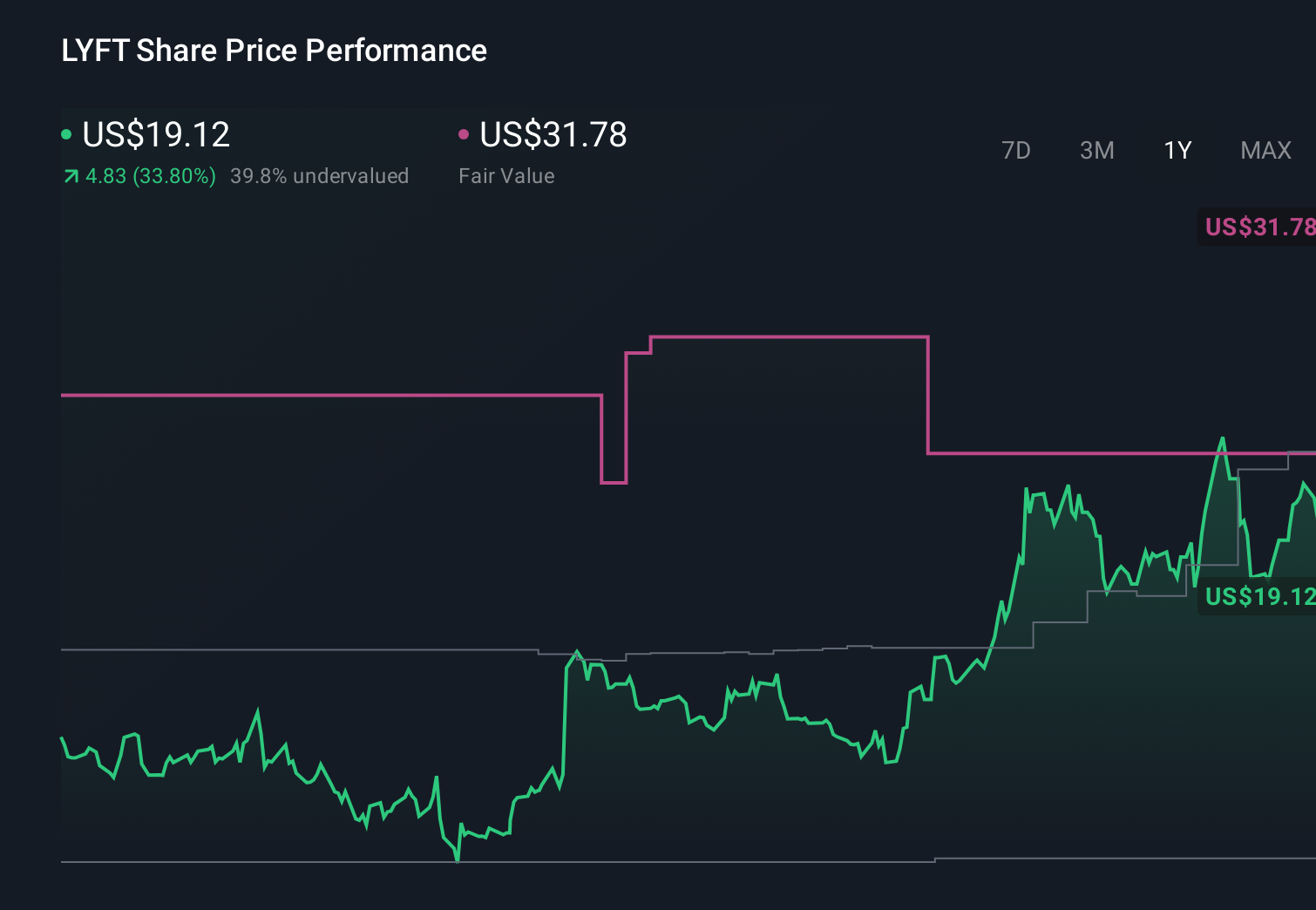
Before this New York taxi move, the most optimistic analysts were already assuming Lyft could reach about US$9.6 billion of revenue and US$480.3 million of earnings by 2029, which is far more upbeat than consensus and leans heavily on partnerships to offset risks like higher electrification and labor costs.
Explore 9 other fair value estimates on Lyft - why the stock might be worth over 4x more than the current price!
Reach Your Own Conclusion
Don't just follow the ticker - dig into the data and build a conviction that's truly your own.
- A great starting point for your Lyft research is our analysis highlighting 3 key rewards and 2 important warning signs that could impact your investment decision.
- Our free Lyft research report provides a comprehensive fundamental analysis summarized in a single visual - the Snowflake - making it easy to evaluate Lyft's overall financial health at a glance.
Looking For Alternative Opportunities?
Markets shift fast. These stocks won't stay hidden for long. Get the list while it matters:
- Outshine the giants: these 17 early-stage AI stocks could fund your retirement.
- AI is about to change healthcare. These 40 stocks are working on everything from early diagnostics to drug discovery. The best part - they are all under $10b in market cap - there's still time to get in early.
- Capitalize on the AI infrastructure supercycle with our selection of the 55 best 'picks and shovels' of the AI gold rush converting record-breaking demand into massive cash flow.
This article by Simply Wall St is general in nature. We provide commentary based on historical data and analyst forecasts only using an unbiased methodology and our articles are not intended to be financial advice. It does not constitute a recommendation to buy or sell any stock, and does not take account of your objectives, or your financial situation. We aim to bring you long-term focused analysis driven by fundamental data. Note that our analysis may not factor in the latest price-sensitive company announcements or qualitative material. Simply Wall St has no position in any stocks mentioned.
Have feedback on this article? Concerned about the content? Get in touch with us directly. Alternatively, email editorial-team@simplywallst.com