


Boeing (BA) Could Be 23% Undervalued As Farnborough Orders Draw Focus
Boeing (BA) is back in focus after securing 173 aircraft orders at the Farnborough Airshow, edging Airbus, and progress on 737 Max 10 and Max 7 safety certifications adds another focal point for investors.
See our latest analysis for Boeing.
Despite the Farnborough order win and progress on 737 Max certifications, Boeing’s recent share price return has been weak, with the stock down 9.99% over 90 days and the 1 year total shareholder return down 9.53%, suggesting momentum has been fading into these headlines.
If you are following Boeing’s aerospace story, it can be useful to see what else is moving in related areas, including 54 AI infrastructure stocks.
Boeing’s order book and multi segment footprint appear robust on paper, yet the stock has fallen nearly 10% over the past year. Are investors being cautious, or is the current share price already fair for that strength?
Most Popular Narrative: 22.5% Undervalued
The most followed Boeing narrative points to a fair value of $270 per share, compared with the recent close at $209.23, framing a sizeable gap for investors to weigh.
Production stabilization and planned rate increases for key aircraft models (737 MAX, 787) position Boeing to benefit directly from robust global demand for air travel, driven by expanding middle-class populations and urbanization in emerging markets. These demand tailwinds are expected to support revenue growth and eventual operating margin expansion as fixed costs are spread over higher unit volumes.
Want to understand why this narrative still sees upside even with a high current P/E and recent share price weakness? The story leans heavily on a specific mix of revenue growth, margin uplift and a future earnings multiple that assumes Boeing looks very different a few years from now. Curious which assumptions really move the fair value needle in this model and how they stack up against current profitability?
Result: Fair Value of $270 (UNDERVALUED)
Have a read of the narrative in full and understand what's behind the forecasts.
However, Boeing’s story still carries clear pressure points, including certification setbacks on key 737 variants and a heavy debt load that could constrain flexibility if cash generation disappoints.
Find out about the key risks to this Boeing narrative.
Another View: Boeing’s Rich Earnings Multiple
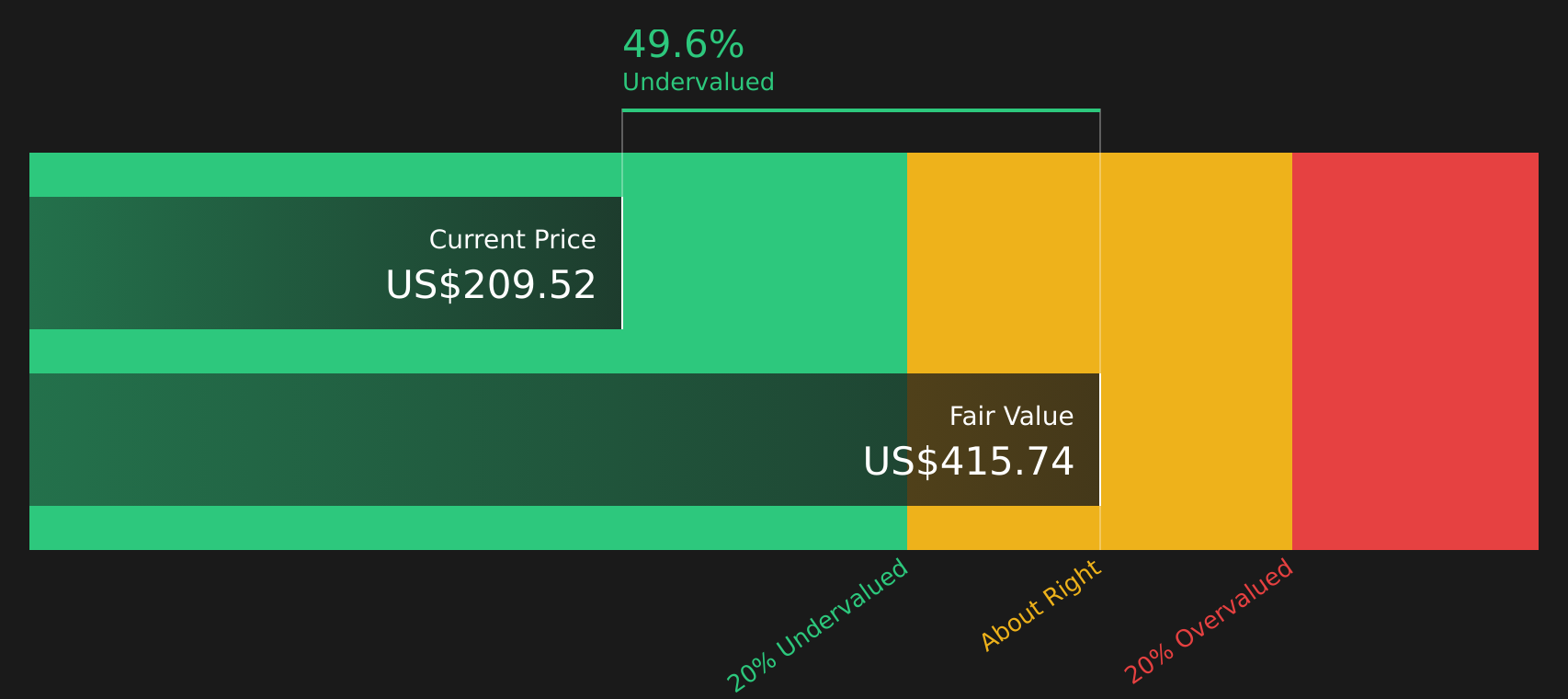
The SWS DCF model points to Boeing being 49.4% below an estimate of future cash flow value, yet the stock trades on a P/E of 85.8x versus a fair ratio of 66.8x and an industry average of about 39x. That mix of upside and a rich multiple raises a simple question: how much valuation risk are you really comfortable with?
Look into how the SWS DCF model arrives at its fair value.
Next Steps
With mixed signals around Boeing’s valuation and outlook, this is the moment to look through the data yourself and decide where you stand, starting with 4 key rewards and 2 important warning signs.
Looking for more investment ideas beyond Boeing?
Once you have formed a view on Boeing, do not stop there. Use the same structured approach to uncover other stocks that might fit your goals.
- Spot potential future standouts early by reviewing the screener containing 20 high quality undiscovered gems that currently meet strict fundamental filters.
- Strengthen your core holdings with the solid balance sheet and fundamentals stocks screener (48 results) that can help anchor a portfolio in tougher markets.
- Lower the overall risk profile of your portfolio by checking out the 79 resilient stocks with low risk scores that still meet quality thresholds.
This article by Simply Wall St is general in nature. We provide commentary based on historical data and analyst forecasts only using an unbiased methodology and our articles are not intended to be financial advice. It does not constitute a recommendation to buy or sell any stock, and does not take account of your objectives, or your financial situation. We aim to bring you long-term focused analysis driven by fundamental data. Note that our analysis may not factor in the latest price-sensitive company announcements or qualitative material. Simply Wall St has no position in any stocks mentioned.
Have feedback on this article? Concerned about the content? Get in touch with us directly. Alternatively, email editorial-team@simplywallst.com