


Philip Morris (NYSE:PM) Surprises With Q2 CY2026 Sales

Tobacco company Philip Morris International (NYSE:PM) beat Wall Street’s revenue expectations in Q2 CY2026, with sales up 10.4% year on year to $11.19 billion. Its GAAP profit of $1.80 per share was 9% below analysts’ consensus estimates.
Is now the time to buy Philip Morris? Find out by accessing our full research report, it’s free.
Philip Morris (PM) Q2 CY2026 Highlights:
- Revenue: $11.19 billion vs analyst estimates of $10.61 billion (10.4% year-on-year growth, 5.5% beat)
- EPS (GAAP): $1.80 vs analyst expectations of $1.98 (9% miss)
- Operating Margin: 40.5%, up from 36.6% in the same quarter last year
- Market Capitalization: $293.1 billion
Company Overview
Founded in 1847, Philip Morris International (NYSE:PM) manufactures and sells a wide range of tobacco and nicotine-containing products, including cigarettes, heated tobacco products, and oral nicotine pouches.
Revenue Growth
A company’s long-term sales performance is one signal of its overall quality. Any business can put up a good quarter or two, but the best consistently grow over the long haul.
With $42.54 billion in revenue over the past 12 months, Philip Morris is one of the most widely recognized consumer staples companies. Its influence over consumers gives it negotiating leverage with distributors, enabling it to pick and choose where it sells its products (a luxury many don’t have).
As you can see below, Philip Morris grew its sales at a decent 8.7% compounded annual growth rate over the last three years. This shows its offerings generated slightly more demand than the average consumer staples company, a helpful starting point for our analysis.
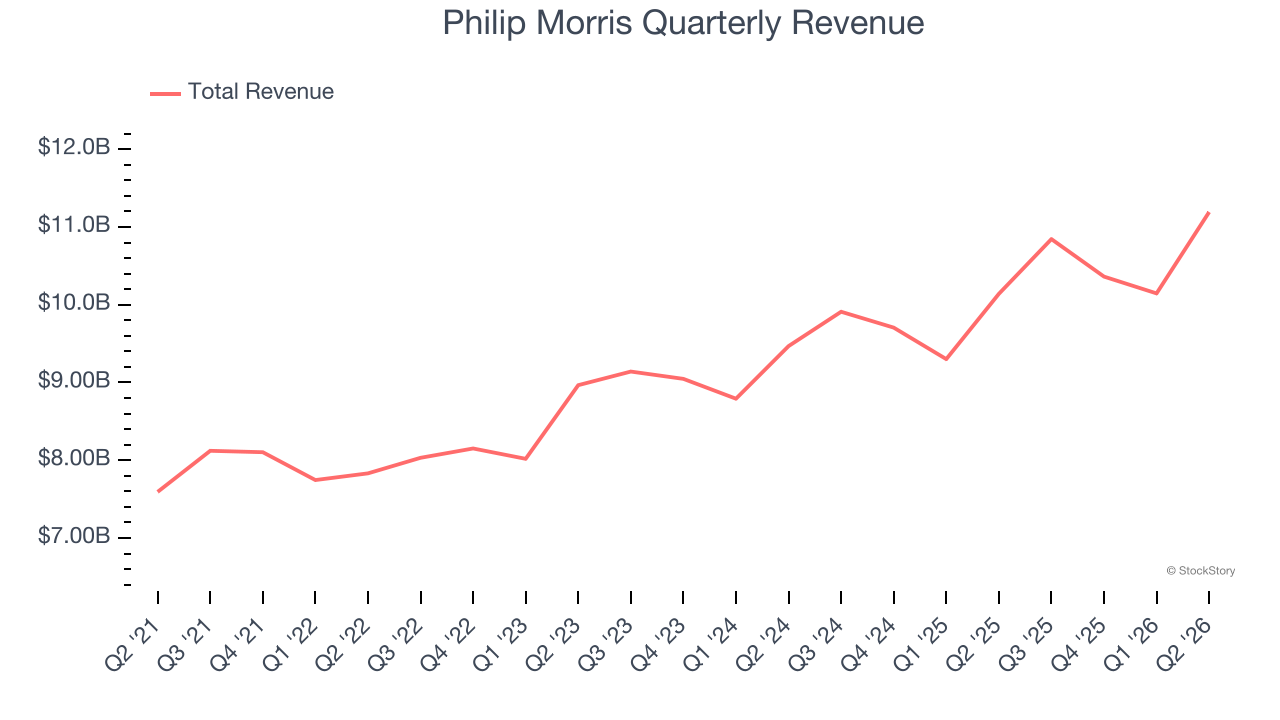
This quarter, Philip Morris reported year-on-year revenue growth of 10.4%, and its $11.19 billion of revenue exceeded Wall Street’s estimates by 5.5%.
Looking ahead, sell-side analysts expect revenue to grow 4.6% over the next 12 months, a deceleration versus the last three years. This projection is underwhelming and indicates its products will face some demand challenges. At least the company is tracking well in other measures of financial health.
ONE MORE THING: The $21 AI Application Stock Wall Street Forgot. While Wall Street obsesses over who’s building AI, one company is already using it to print money. And nobody’s paying attention.
AI chip stocks trade at ridiculous valuations. This company processes a trillion consumer signals monthly using AI and trades at a third of the price. The gap won’t last. The institutions will figure it out. You need to see this first. Read the FREE Report Before They Notice.
Cash Is King
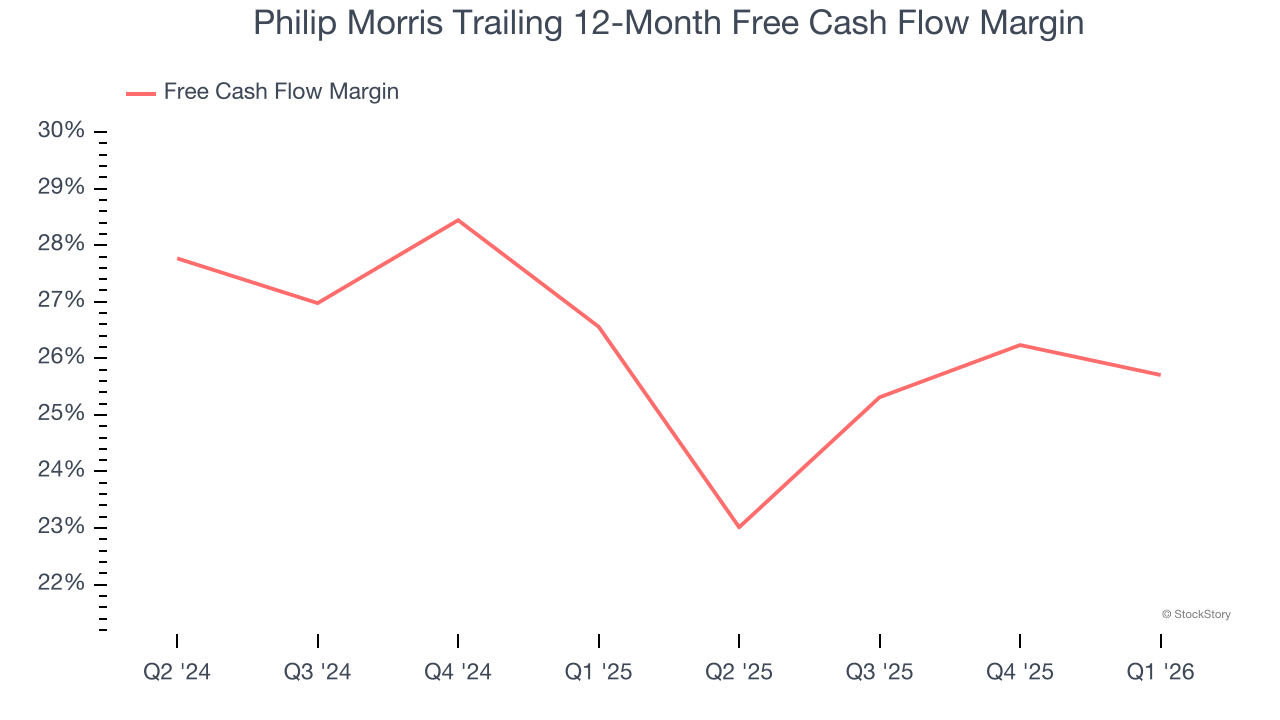
Free cash flow isn’t a prominently featured metric in company financials and earnings releases, but we think it’s telling because it accounts for all operating and capital expenses, making it tough to manipulate. Cash is king.
Philip Morris has shown terrific cash profitability, driven by its lucrative business model that enables it to reinvest, return capital to investors, and stay ahead of the competition. The company’s free cash flow margin was among the best in the consumer staples sector, averaging 23.6% over the last two years.
Key Takeaways from Philip Morris’s Q2 Results
We enjoyed seeing Philip Morris beat analysts’ revenue expectations this quarter. On the other hand, its EPS missed. Zooming out, we think this was a mixed quarter. The stock remained flat at $186.50 immediately after reporting.
So do we think Philip Morris is an attractive buy at the current price? If you’re making that decision, you should consider the bigger picture of valuation, business qualities, as well as the latest earnings. We cover that in our actionable full research report which you can read here (it’s free).