


We Think Dubber (ASX:DUB) Needs To Drive Business Growth Carefully
We can readily understand why investors are attracted to unprofitable companies. For example, although software-as-a-service business Salesforce.com lost money for years while it grew recurring revenue, if you held shares since 2005, you'd have done very well indeed. But the harsh reality is that very many loss making companies burn through all their cash and go bankrupt.
Given this risk, we thought we'd take a look at whether Dubber (ASX:DUB) shareholders should be worried about its cash burn. In this report, we will consider the company's annual negative free cash flow, henceforth referring to it as the 'cash burn'. First, we'll determine its cash runway by comparing its cash burn with its cash reserves.
When Might Dubber Run Out Of Money?
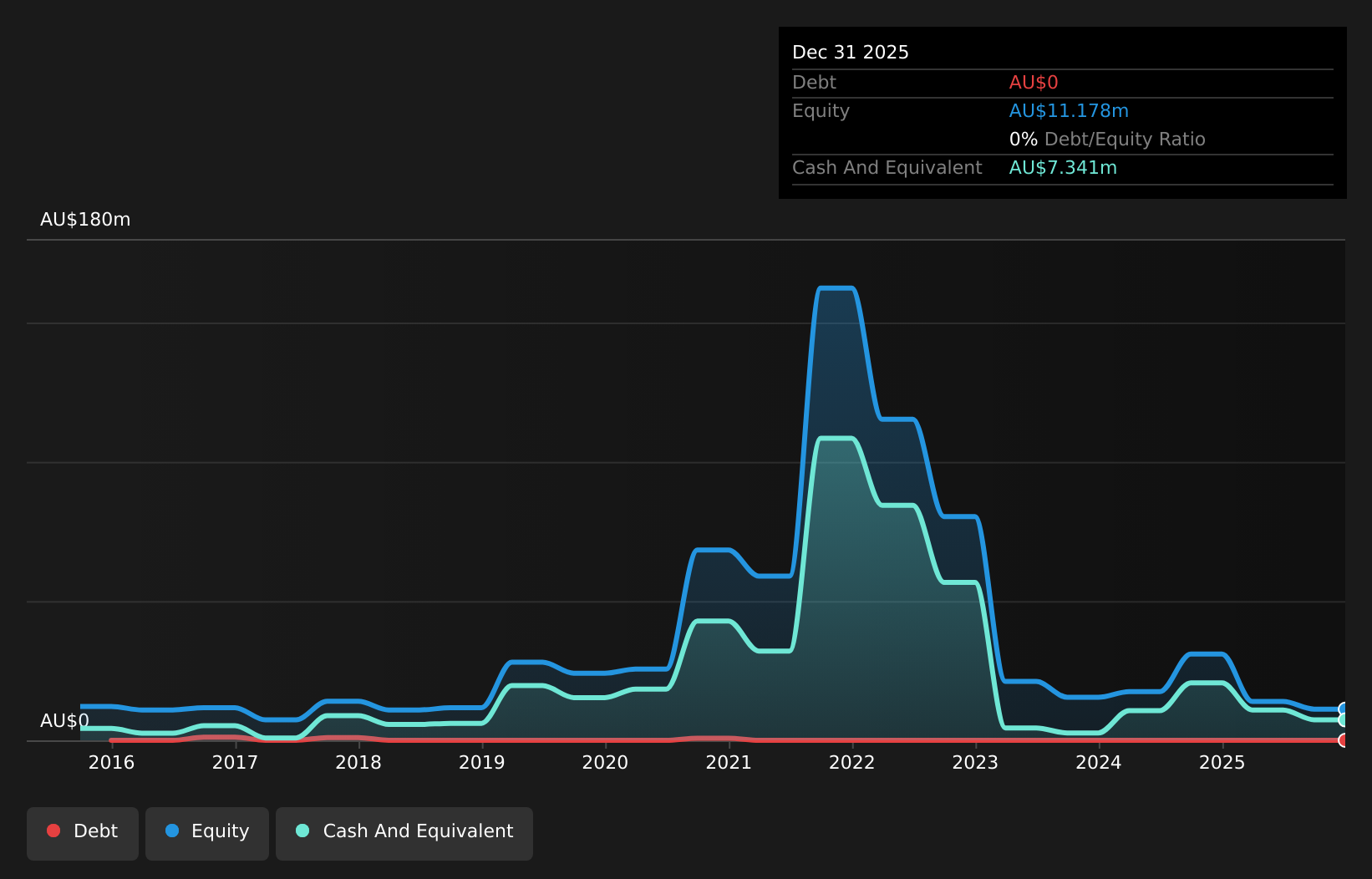
You can calculate a company's cash runway by dividing the amount of cash it has by the rate at which it is spending that cash. In December 2025, Dubber had AU$7.3m in cash, and was debt-free. Looking at the last year, the company burnt through AU$13m. That means it had a cash runway of around 7 months as of December 2025. To be frank, this kind of short runway puts us on edge, as it indicates the company must reduce its cash burn significantly, or else raise cash imminently. The image below shows how its cash balance has been changing over the last few years.
See our latest analysis for Dubber
How Well Is Dubber Growing?
It was fairly positive to see that Dubber reduced its cash burn by 45% during the last year. Having said that, the flat operating revenue was a bit mundane. On balance, we'd say the company is improving over time. Of course, we've only taken a quick look at the stock's growth metrics, here. This graph of historic earnings and revenue shows how Dubber is building its business over time.
How Easily Can Dubber Raise Cash?
Since Dubber revenue has been falling, the market will likely be considering how it can raise more cash if need be. Generally speaking, a listed business can raise new cash through issuing shares or taking on debt. Commonly, a business will sell new shares in itself to raise cash and drive growth. By comparing a company's annual cash burn to its total market capitalisation, we can estimate roughly how many shares it would have to issue in order to run the company for another year (at the same burn rate).
Dubber has a market capitalisation of AU$30m and burnt through AU$13m last year, which is 43% of the company's market value. That's high expenditure relative to the value of the entire company, so if it does have to issue shares to fund more growth, that could end up really hurting shareholders returns (through significant dilution).
Is Dubber's Cash Burn A Worry?
Even though its cash runway makes us a little nervous, we are compelled to mention that we thought Dubber's cash burn reduction was relatively promising. After looking at that range of measures, we think shareholders should be extremely attentive to how the company is using its cash, as the cash burn makes us uncomfortable. On another note, Dubber has 3 warning signs (and 2 which are concerning) we think you should know about.
Of course Dubber may not be the best stock to buy. So you may wish to see this free collection of companies boasting high return on equity, or this list of stocks with high insider ownership.
Have feedback on this article? Concerned about the content? Get in touch with us directly. Alternatively, email editorial-team (at) simplywallst.com.
This article by Simply Wall St is general in nature. We provide commentary based on historical data and analyst forecasts only using an unbiased methodology and our articles are not intended to be financial advice. It does not constitute a recommendation to buy or sell any stock, and does not take account of your objectives, or your financial situation. We aim to bring you long-term focused analysis driven by fundamental data. Note that our analysis may not factor in the latest price-sensitive company announcements or qualitative material. Simply Wall St has no position in any stocks mentioned.