
 Nasdaq
 华尔街日报
华尔街日报SoftBank (TSE:9434) Will Pay A Dividend Of ¥4.30
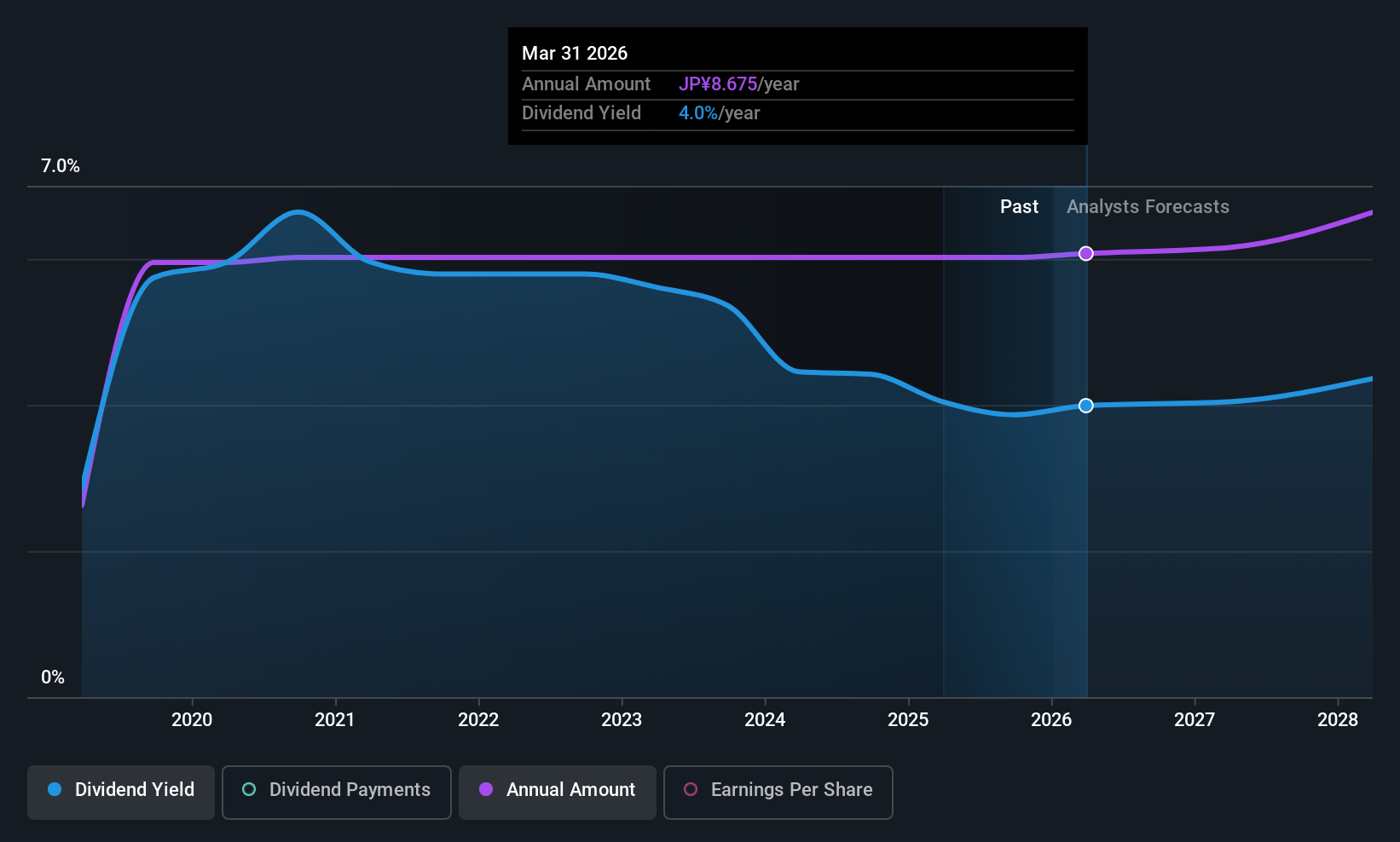
SoftBank Corp. (TSE:9434) will pay a dividend of ¥4.30 on the 12th of June. This means the annual payment is 4.0% of the current stock price, which is above the average for the industry.
SoftBank's Projected Earnings Seem Likely To Cover Future Distributions
Impressive dividend yields are good, but this doesn't matter much if the payments can't be sustained. The last dividend made up a very large portion of earnings and also represented 77% of free cash flows. This is usually an indication that the focus of the company is returning cash to shareholders rather than reinvesting it for growth.
Over the next year, EPS is forecast to expand by 7.0%. If the dividend continues along recent trends, we estimate the payout ratio will be 74%, which would make us comfortable with the sustainability of the dividend, despite the levels currently being quite high.
View our latest analysis for SoftBank
SoftBank Is Still Building Its Track Record
SoftBank's dividend has been pretty stable for a little while now, but we will continue to be cautious until it has been demonstrated for a few more years. The dividend has gone from an annual total of ¥3.75 in 2019 to the most recent total annual payment of ¥8.60. This implies that the company grew its distributions at a yearly rate of about 13% over that duration. It is always nice to see strong dividend growth, but with such a short payment history we wouldn't be inclined to rely on it until a longer track record can be developed.
Dividend Growth May Be Hard To Achieve
Some investors will be chomping at the bit to buy some of the company's stock based on its dividend history. Earnings per share has been crawling upwards at 3.1% per year. SoftBank's earnings per share has barely grown, which is not ideal - perhaps this is why the company pays out the majority of its earnings to shareholders. That's fine as far as it goes, but we're less enthusiastic as this often signals that the dividend is likely to grow slower in the future.
Our Thoughts On SoftBank's Dividend
Overall, it's nice to see a consistent dividend payment, but we think that longer term, the current level of payment might be unsustainable. The payments are bit high to be considered sustainable, and the track record isn't the best. We would probably look elsewhere for an income investment.
Companies possessing a stable dividend policy will likely enjoy greater investor interest than those suffering from a more inconsistent approach. At the same time, there are other factors our readers should be conscious of before pouring capital into a stock. Taking the debate a bit further, we've identified 1 warning sign for SoftBank that investors need to be conscious of moving forward. Looking for more high-yielding dividend ideas? Try our collection of strong dividend payers.
Have feedback on this article? Concerned about the content? Get in touch with us directly. Alternatively, email editorial-team (at) simplywallst.com.
This article by Simply Wall St is general in nature. We provide commentary based on historical data and analyst forecasts only using an unbiased methodology and our articles are not intended to be financial advice. It does not constitute a recommendation to buy or sell any stock, and does not take account of your objectives, or your financial situation. We aim to bring you long-term focused analysis driven by fundamental data. Note that our analysis may not factor in the latest price-sensitive company announcements or qualitative material. Simply Wall St has no position in any stocks mentioned.