
 Nasdaq
 华尔街日报
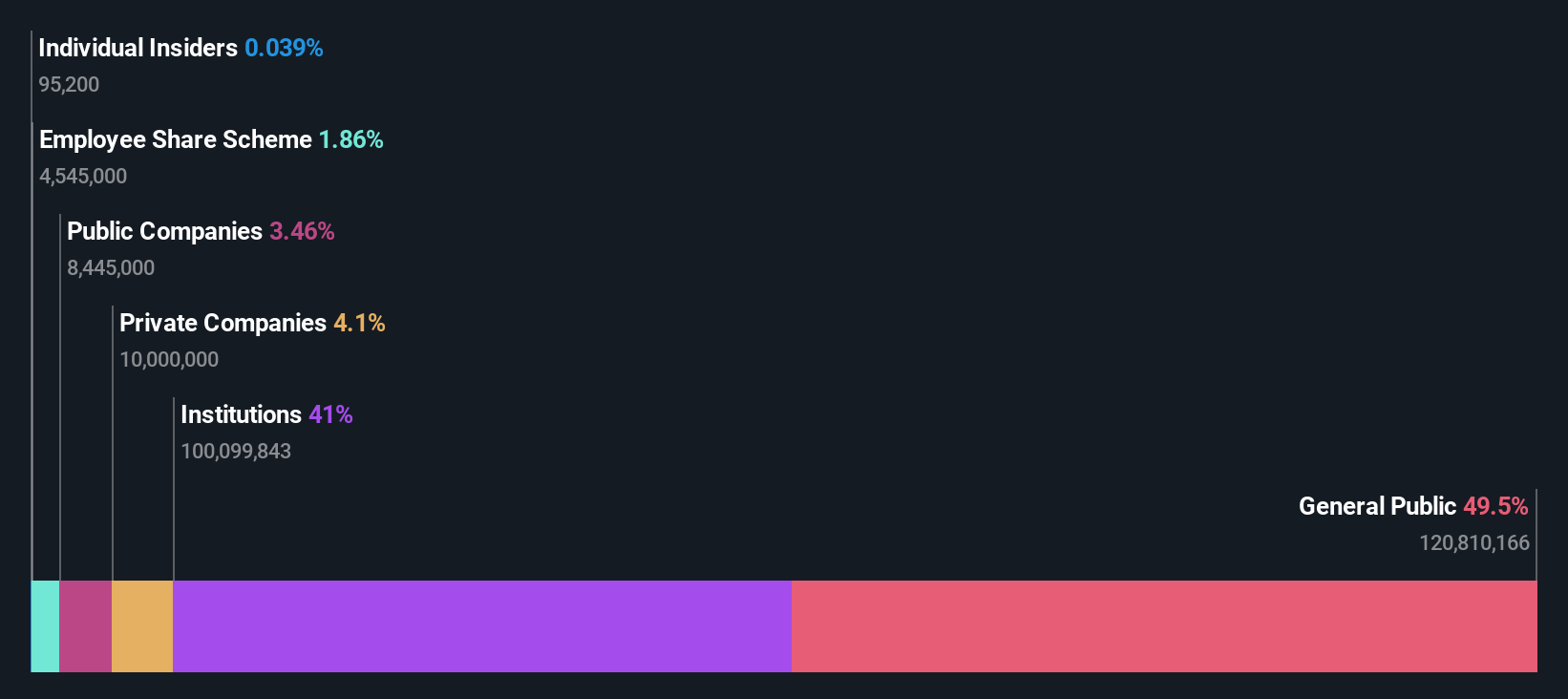
华尔街日报While institutions own 41% of Citizen Watch Co., Ltd. (TSE:7762), individual investors are its largest shareholders with 50% ownership
Key Insights
- Citizen Watch's significant individual investors ownership suggests that the key decisions are influenced by shareholders from the larger public
- A total of 25 investors have a majority stake in the company with 50% ownership
- Institutions own 41% of Citizen Watch
Every investor in Citizen Watch Co., Ltd. (TSE:7762) should be aware of the most powerful shareholder groups. With 50% stake, individual investors possess the maximum shares in the company. Put another way, the group faces the maximum upside potential (or downside risk).
Meanwhile, institutions make up 41% of the company’s shareholders. Large companies usually have institutions as shareholders, and we usually see insiders owning shares in smaller companies.
Let's take a closer look to see what the different types of shareholders can tell us about Citizen Watch.
See our latest analysis for Citizen Watch
What Does The Institutional Ownership Tell Us About Citizen Watch?
Institutional investors commonly compare their own returns to the returns of a commonly followed index. So they generally do consider buying larger companies that are included in the relevant benchmark index.
As you can see, institutional investors have a fair amount of stake in Citizen Watch. This can indicate that the company has a certain degree of credibility in the investment community. However, it is best to be wary of relying on the supposed validation that comes with institutional investors. They too, get it wrong sometimes. It is not uncommon to see a big share price drop if two large institutional investors try to sell out of a stock at the same time. So it is worth checking the past earnings trajectory of Citizen Watch, (below). Of course, keep in mind that there are other factors to consider, too.

Hedge funds don't have many shares in Citizen Watch. The company's largest shareholder is Nissay Asset Management Corporation, with ownership of 4.9%. With 4.1% and 3.4% of the shares outstanding respectively, Nichia Corporation and The Vanguard Group, Inc. are the second and third largest shareholders.
Looking at the shareholder registry, we can see that 50% of the ownership is controlled by the top 25 shareholders, meaning that no single shareholder has a majority interest in the ownership.
While studying institutional ownership for a company can add value to your research, it is also a good practice to research analyst recommendations to get a deeper understand of a stock's expected performance. Quite a few analysts cover the stock, so you could look into forecast growth quite easily.
Insider Ownership Of Citizen Watch
The definition of company insiders can be subjective and does vary between jurisdictions. Our data reflects individual insiders, capturing board members at the very least. Company management run the business, but the CEO will answer to the board, even if he or she is a member of it.
Most consider insider ownership a positive because it can indicate the board is well aligned with other shareholders. However, on some occasions too much power is concentrated within this group.
Our information suggests that Citizen Watch Co., Ltd. insiders own under 1% of the company. We do note, however, it is possible insiders have an indirect interest through a private company or other corporate structure. It is a pretty big company, so it would be possible for board members to own a meaningful interest in the company, without owning much of a proportional interest. In this case, they own around JP¥125m worth of shares (at current prices). It is always good to see at least some insider ownership, but it might be worth checking if those insiders have been selling.
General Public Ownership
The general public-- including retail investors -- own 50% stake in the company, and hence can't easily be ignored. This size of ownership, while considerable, may not be enough to change company policy if the decision is not in sync with other large shareholders.
Private Company Ownership
Our data indicates that Private Companies hold 4.1%, of the company's shares. It might be worth looking deeper into this. If related parties, such as insiders, have an interest in one of these private companies, that should be disclosed in the annual report. Private companies may also have a strategic interest in the company.
Public Company Ownership
Public companies currently own 3.5% of Citizen Watch stock. It's hard to say for sure but this suggests they have entwined business interests. This might be a strategic stake, so it's worth watching this space for changes in ownership.
Next Steps:
It's always worth thinking about the different groups who own shares in a company. But to understand Citizen Watch better, we need to consider many other factors. To that end, you should be aware of the 1 warning sign we've spotted with Citizen Watch .
Ultimately the future is most important. You can access this free report on analyst forecasts for the company.
NB: Figures in this article are calculated using data from the last twelve months, which refer to the 12-month period ending on the last date of the month the financial statement is dated. This may not be consistent with full year annual report figures.
Have feedback on this article? Concerned about the content? Get in touch with us directly. Alternatively, email editorial-team (at) simplywallst.com.
This article by Simply Wall St is general in nature. We provide commentary based on historical data and analyst forecasts only using an unbiased methodology and our articles are not intended to be financial advice. It does not constitute a recommendation to buy or sell any stock, and does not take account of your objectives, or your financial situation. We aim to bring you long-term focused analysis driven by fundamental data. Note that our analysis may not factor in the latest price-sensitive company announcements or qualitative material. Simply Wall St has no position in any stocks mentioned.