
 Nasdaq
 华尔街日报
华尔街日报Retail investors who hold 53% of Palisades Goldcorp Ltd. (CVE:PALI) gained 32%, insiders profited as well
Key Insights
- The considerable ownership by retail investors in Palisades Goldcorp indicates that they collectively have a greater say in management and business strategy
- The top 7 shareholders own 47% of the company
- Insiders have been buying lately
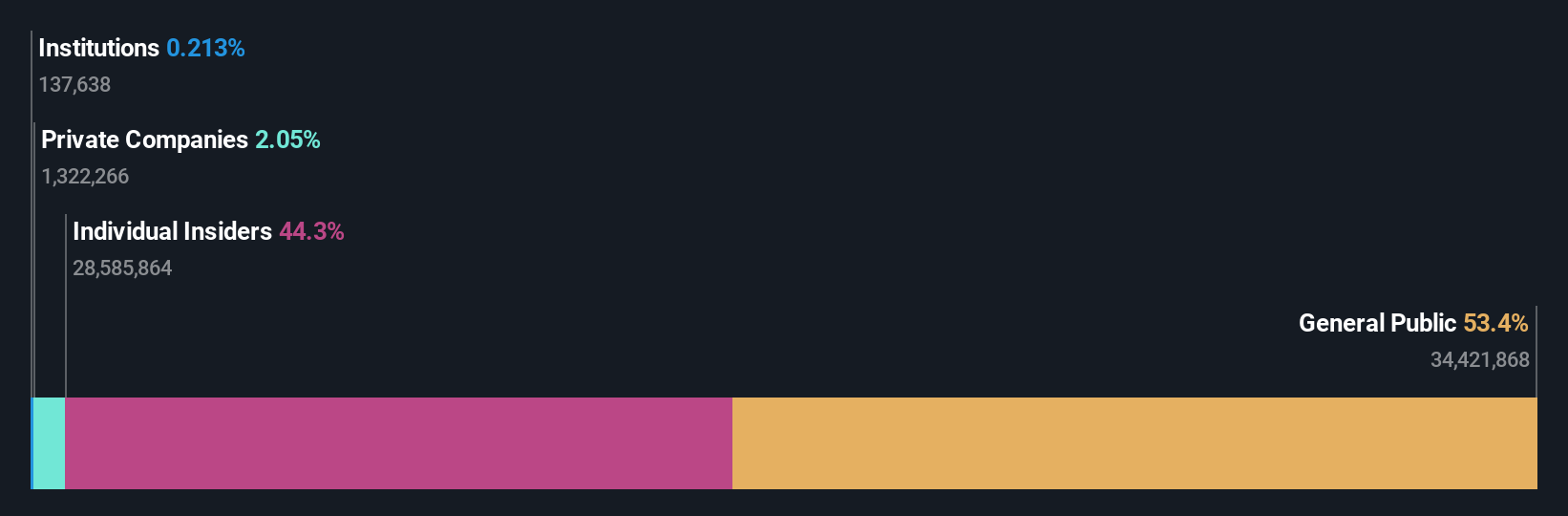
Every investor in Palisades Goldcorp Ltd. (CVE:PALI) should be aware of the most powerful shareholder groups. The group holding the most number of shares in the company, around 53% to be precise, is retail investors. In other words, the group stands to gain the most (or lose the most) from their investment into the company.
While retail investors were the group that reaped the most benefits after last week’s 32% price gain, insiders also received a 44% cut.
In the chart below, we zoom in on the different ownership groups of Palisades Goldcorp.
See our latest analysis for Palisades Goldcorp
What Does The Lack Of Institutional Ownership Tell Us About Palisades Goldcorp?
We don't tend to see institutional investors holding stock of companies that are very risky, thinly traded, or very small. Though we do sometimes see large companies without institutions on the register, it's not particularly common.
There are multiple explanations for why institutions don't own a stock. The most common is that the company is too small relative to funds under management, so the institution does not bother to look closely at the company. It is also possible that fund managers don't own the stock because they aren't convinced it will perform well. Palisades Goldcorp's earnings and revenue track record (below) may not be compelling to institutional investors -- or they simply might not have looked at the business closely.

Palisades Goldcorp is not owned by hedge funds. Looking at our data, we can see that the largest shareholder is the CEO Collin Kettell with 22% of shares outstanding. Meanwhile, the second and third largest shareholders, hold 20% and 2.1%, of the shares outstanding, respectively.
A deeper look at our ownership data shows that the top 7 shareholders collectively hold less than half of the register, suggesting a large group of small holders where no single shareholder has a majority.
Researching institutional ownership is a good way to gauge and filter a stock's expected performance. The same can be achieved by studying analyst sentiments. Our information suggests that there isn't any analyst coverage of the stock, so it is probably little known.
Insider Ownership Of Palisades Goldcorp
The definition of an insider can differ slightly between different countries, but members of the board of directors always count. Company management run the business, but the CEO will answer to the board, even if he or she is a member of it.
Insider ownership is positive when it signals leadership are thinking like the true owners of the company. However, high insider ownership can also give immense power to a small group within the company. This can be negative in some circumstances.
Our most recent data indicates that insiders own a reasonable proportion of Palisades Goldcorp Ltd.. Insiders have a CA$77m stake in this CA$174m business. This may suggest that the founders still own a lot of shares. You can click here to see if they have been buying or selling.
General Public Ownership
The general public -- including retail investors -- own 53% of Palisades Goldcorp. This level of ownership gives investors from the wider public some power to sway key policy decisions such as board composition, executive compensation, and the dividend payout ratio.
Next Steps:
While it is well worth considering the different groups that own a company, there are other factors that are even more important. Consider risks, for instance. Every company has them, and we've spotted 2 warning signs for Palisades Goldcorp you should know about.
If you would prefer check out another company -- one with potentially superior financials -- then do not miss this free list of interesting companies, backed by strong financial data.
NB: Figures in this article are calculated using data from the last twelve months, which refer to the 12-month period ending on the last date of the month the financial statement is dated. This may not be consistent with full year annual report figures.
Have feedback on this article? Concerned about the content? Get in touch with us directly. Alternatively, email editorial-team (at) simplywallst.com.
This article by Simply Wall St is general in nature. We provide commentary based on historical data and analyst forecasts only using an unbiased methodology and our articles are not intended to be financial advice. It does not constitute a recommendation to buy or sell any stock, and does not take account of your objectives, or your financial situation. We aim to bring you long-term focused analysis driven by fundamental data. Note that our analysis may not factor in the latest price-sensitive company announcements or qualitative material. Simply Wall St has no position in any stocks mentioned.