
 Nasdaq
 华尔街日报
华尔街日报Returns On Capital Are Showing Encouraging Signs At Unihealth Hospitals (NSE:UNIHEALTH)
If we want to find a potential multi-bagger, often there are underlying trends that can provide clues. One common approach is to try and find a company with returns on capital employed (ROCE) that are increasing, in conjunction with a growing amount of capital employed. Put simply, these types of businesses are compounding machines, meaning they are continually reinvesting their earnings at ever-higher rates of return. Speaking of which, we noticed some great changes in Unihealth Hospitals' (NSE:UNIHEALTH) returns on capital, so let's have a look.
Understanding Return On Capital Employed (ROCE)
Just to clarify if you're unsure, ROCE is a metric for evaluating how much pre-tax income (in percentage terms) a company earns on the capital invested in its business. The formula for this calculation on Unihealth Hospitals is:
Return on Capital Employed = Earnings Before Interest and Tax (EBIT) ÷ (Total Assets - Current Liabilities)
0.16 = ₹309m ÷ (₹2.2b - ₹233m) (Based on the trailing twelve months to September 2025).
Thus, Unihealth Hospitals has an ROCE of 16%. On its own, that's a standard return, however it's much better than the 12% generated by the Healthcare industry.
See our latest analysis for Unihealth Hospitals
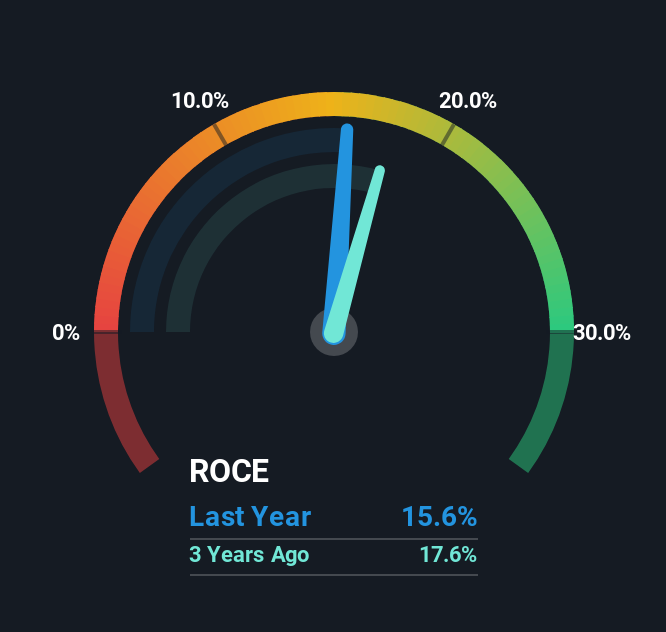
Historical performance is a great place to start when researching a stock so above you can see the gauge for Unihealth Hospitals' ROCE against it's prior returns. If you'd like to look at how Unihealth Hospitals has performed in the past in other metrics, you can view this free graph of Unihealth Hospitals' past earnings, revenue and cash flow.
The Trend Of ROCE
Investors would be pleased with what's happening at Unihealth Hospitals. Over the last five years, returns on capital employed have risen substantially to 16%. The amount of capital employed has increased too, by 345%. This can indicate that there's plenty of opportunities to invest capital internally and at ever higher rates, a combination that's common among multi-baggers.
In another part of our analysis, we noticed that the company's ratio of current liabilities to total assets decreased to 11%, which broadly means the business is relying less on its suppliers or short-term creditors to fund its operations. So shareholders would be pleased that the growth in returns has mostly come from underlying business performance.
In Conclusion...
All in all, it's terrific to see that Unihealth Hospitals is reaping the rewards from prior investments and is growing its capital base. Since the stock has returned a solid 98% to shareholders over the last year, it's fair to say investors are beginning to recognize these changes. With that being said, we still think the promising fundamentals mean the company deserves some further due diligence.
One final note, you should learn about the 3 warning signs we've spotted with Unihealth Hospitals (including 2 which don't sit too well with us) .
While Unihealth Hospitals isn't earning the highest return, check out this free list of companies that are earning high returns on equity with solid balance sheets.
Have feedback on this article? Concerned about the content? Get in touch with us directly. Alternatively, email editorial-team (at) simplywallst.com.
This article by Simply Wall St is general in nature. We provide commentary based on historical data and analyst forecasts only using an unbiased methodology and our articles are not intended to be financial advice. It does not constitute a recommendation to buy or sell any stock, and does not take account of your objectives, or your financial situation. We aim to bring you long-term focused analysis driven by fundamental data. Note that our analysis may not factor in the latest price-sensitive company announcements or qualitative material. Simply Wall St has no position in any stocks mentioned.