
 Nasdaq
 华尔街日报
华尔街日报If You'd Invested $1,000 in Visa 10 Years Ago, Here's How Much You'd Have Today
Key Points
Investors would've preferred to own Visa shares instead of an S&P 500 index fund in the past decade.
The company benefits from a durable growth tailwind as cashless transactions become more widely adopted.
Visa (NYSE: V) dominates the card payments industry. During fiscal 2025 (ended Sept. 30), it handled an unbelievable $16.7 trillion in payment volume. It has global reach, facilitating payments in more than 220 countries and territories. Most readers probably have a Visa-branded debit or credit card in their wallets right now.
With this kind of market dominance, it's not surprising to learn that shares have performed well. If you'd invested $1,000 in this top financial stock 10 years ago, here's how much you'd have today.
Where to invest $1,000 right now? Our analyst team just revealed what they believe are the 10 best stocks to buy right now. Continue »
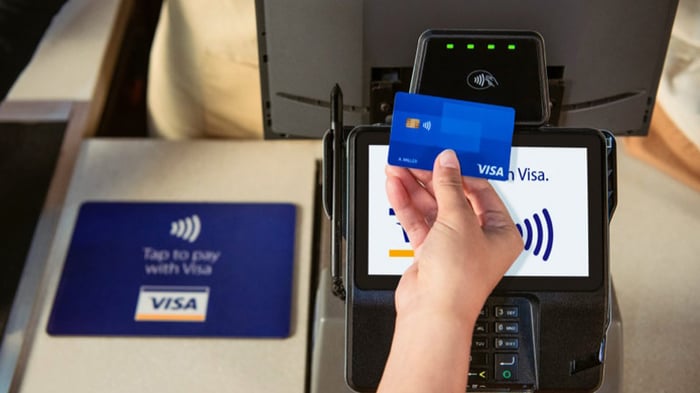
Image source: Visa.
Visa shares outpace the S&P 500
Over the past decade, shares of Visa have produced a total return of 385% (as of Dec. 22). Investors during this time would've seen a $1,000 initial capital outlay turn into $4,884 today.
That gain outpaces the S&P 500. The benchmark's total return during the same period was 302%.
Strong financial results lead the way
Visa collected $13.9 billion in revenue in fiscal 2015, a figure that climbed 188% to $40 billion in fiscal 2025. Greater adoption of cashless payment methods has propelled growth, with Visa currently having 4.9 billion cards in use around the world.
Net income soared in the last 10 years. This is one of the most profitable businesses on Earth. Visa's net profit margin last year was a stellar 50%.
Neil Patel has no position in any of the stocks mentioned. The Motley Fool has positions in and recommends Visa. The Motley Fool has a disclosure policy.