
 Nasdaq
 华尔街日报
华尔街日报What Paladin Energy Ltd's (ASX:PDN) 30% Share Price Gain Is Not Telling You
Paladin Energy Ltd (ASX:PDN) shareholders would be excited to see that the share price has had a great month, posting a 30% gain and recovering from prior weakness. Looking further back, the 25% rise over the last twelve months isn't too bad notwithstanding the strength over the last 30 days.
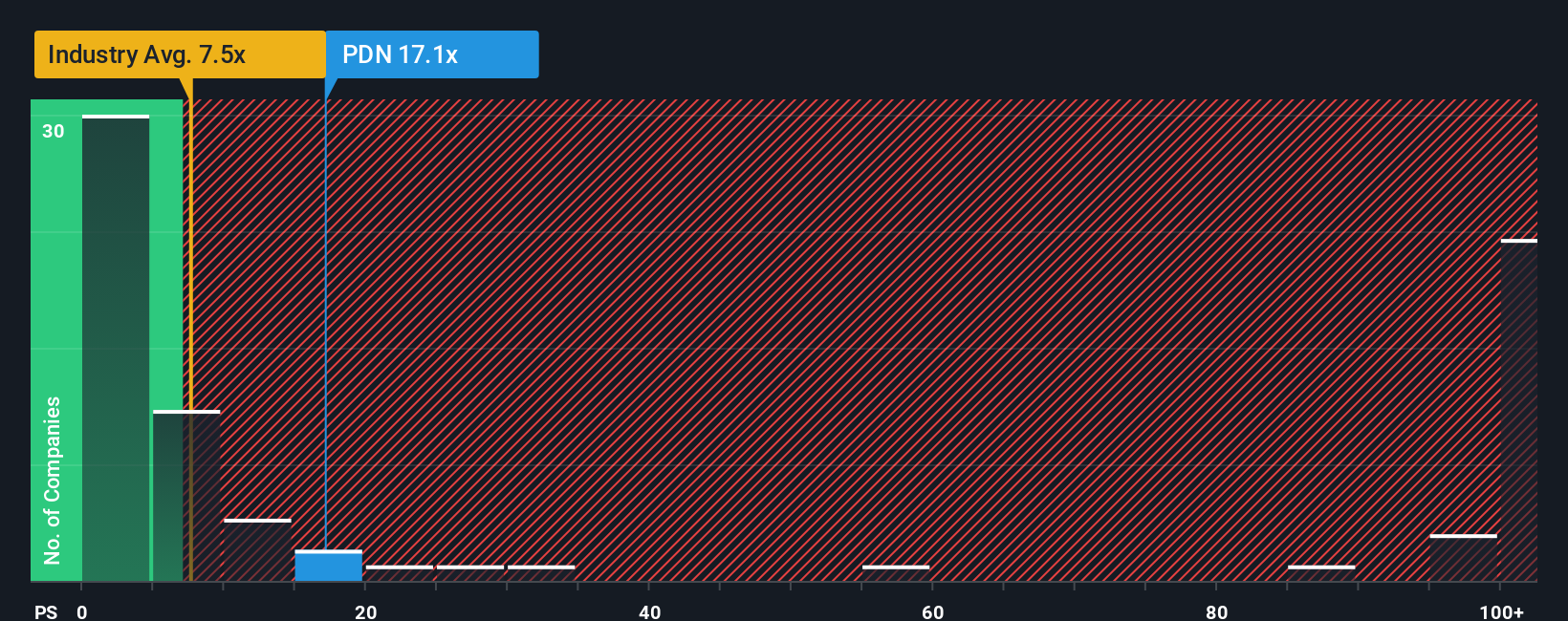
After such a large jump in price, Paladin Energy may be sending very bearish signals at the moment with a price-to-sales (or "P/S") ratio of 17.1x, since almost half of all companies in the Oil and Gas industry in Australia have P/S ratios under 7.5x and even P/S lower than 1.8x are not unusual. Although, it's not wise to just take the P/S at face value as there may be an explanation why it's so lofty.
View our latest analysis for Paladin Energy
How Has Paladin Energy Performed Recently?
Paladin Energy certainly has been doing a good job lately as it's been growing revenue more than most other companies. The P/S is probably high because investors think this strong revenue performance will continue. However, if this isn't the case, investors might get caught out paying too much for the stock.
Keen to find out how analysts think Paladin Energy's future stacks up against the industry? In that case, our free report is a great place to start.What Are Revenue Growth Metrics Telling Us About The High P/S?
In order to justify its P/S ratio, Paladin Energy would need to produce outstanding growth that's well in excess of the industry.
Taking a look back first, we see that the company's revenues underwent some rampant growth over the last 12 months. The latest three year period has also seen an incredible overall rise in revenue, aided by its incredible short-term performance. Accordingly, shareholders would have been over the moon with those medium-term rates of revenue growth.
Looking ahead now, revenue is anticipated to climb by 45% each year during the coming three years according to the twelve analysts following the company. With the industry predicted to deliver 322% growth each year, the company is positioned for a weaker revenue result.
With this in consideration, we believe it doesn't make sense that Paladin Energy's P/S is outpacing its industry peers. Apparently many investors in the company are way more bullish than analysts indicate and aren't willing to let go of their stock at any price. There's a good chance these shareholders are setting themselves up for future disappointment if the P/S falls to levels more in line with the growth outlook.
The Bottom Line On Paladin Energy's P/S
Shares in Paladin Energy have seen a strong upwards swing lately, which has really helped boost its P/S figure. While the price-to-sales ratio shouldn't be the defining factor in whether you buy a stock or not, it's quite a capable barometer of revenue expectations.
We've concluded that Paladin Energy currently trades on a much higher than expected P/S since its forecast growth is lower than the wider industry. Right now we aren't comfortable with the high P/S as the predicted future revenues aren't likely to support such positive sentiment for long. Unless these conditions improve markedly, it's very challenging to accept these prices as being reasonable.
You need to take note of risks, for example - Paladin Energy has 2 warning signs (and 1 which is a bit concerning) we think you should know about.
If you're unsure about the strength of Paladin Energy's business, why not explore our interactive list of stocks with solid business fundamentals for some other companies you may have missed.
Have feedback on this article? Concerned about the content? Get in touch with us directly. Alternatively, email editorial-team (at) simplywallst.com.
This article by Simply Wall St is general in nature. We provide commentary based on historical data and analyst forecasts only using an unbiased methodology and our articles are not intended to be financial advice. It does not constitute a recommendation to buy or sell any stock, and does not take account of your objectives, or your financial situation. We aim to bring you long-term focused analysis driven by fundamental data. Note that our analysis may not factor in the latest price-sensitive company announcements or qualitative material. Simply Wall St has no position in any stocks mentioned.