
 Nasdaq
 华尔街日报
华尔街日报Several Insiders Invested In BlackWall Flagging Positive News
When a single insider purchases stock, it is typically not a major deal. However, when multiple insiders purchase stock, like in BlackWall Limited's (ASX:BWF) instance, it's good news for shareholders.
While we would never suggest that investors should base their decisions solely on what the directors of a company have been doing, we would consider it foolish to ignore insider transactions altogether.
BlackWall Insider Transactions Over The Last Year
The Founder Joseph Glew made the biggest insider purchase in the last 12 months. That single transaction was for AU$114k worth of shares at a price of AU$0.21 each. That implies that an insider found the current price of AU$0.23 per share to be enticing. That means they have been optimistic about the company in the past, though they may have changed their mind. We do always like to see insider buying, but it is worth noting if those purchases were made at well below today's share price, as the discount to value may have narrowed with the rising price. The good news for BlackWall share holders is that insiders were buying at near the current price.
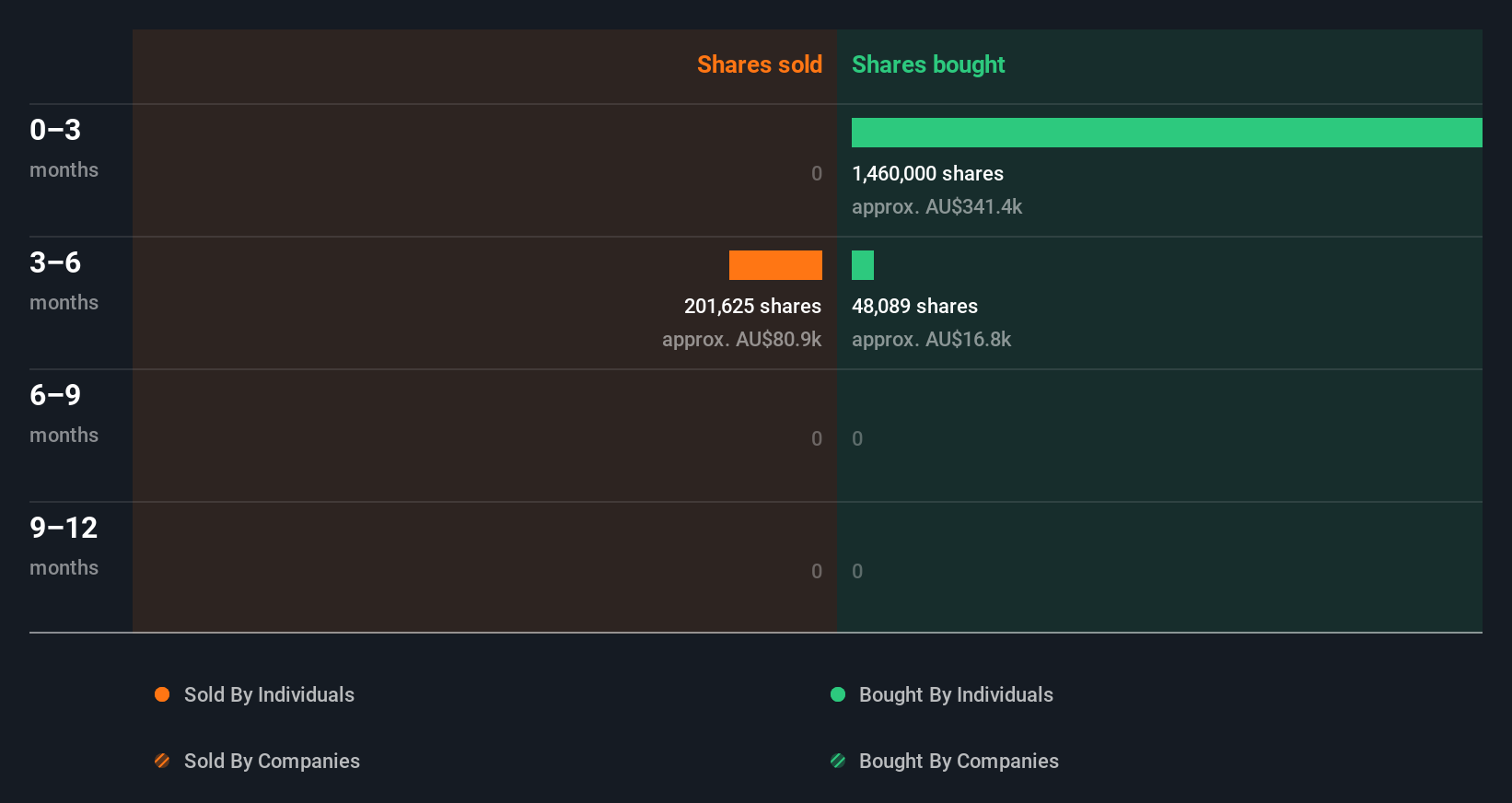
In the last twelve months insiders purchased 1.51m shares for AU$328k. On the other hand they divested 201.63k shares, for AU$81k. In the last twelve months there was more buying than selling by BlackWall insiders. You can see a visual depiction of insider transactions (by companies and individuals) over the last 12 months, below. By clicking on the graph below, you can see the precise details of each insider transaction!
Check out our latest analysis for BlackWall
BlackWall is not the only stock insiders are buying. So take a peek at this free list of under-the-radar companies with insider buying.
Insiders At BlackWall Have Bought Stock Recently
It's good to see that BlackWall insiders have made notable investments in the company's shares. Specifically, Founder Joseph Glew bought AU$313k worth of shares in that time, and we didn't record any sales whatsoever. This is a positive in our book as it implies some confidence.
Does BlackWall Boast High Insider Ownership?
I like to look at how many shares insiders own in a company, to help inform my view of how aligned they are with insiders. Usually, the higher the insider ownership, the more likely it is that insiders will be incentivised to build the company for the long term. BlackWall insiders own about AU$18m worth of shares (which is 46% of the company). I like to see this level of insider ownership, because it increases the chances that management are thinking about the best interests of shareholders.
So What Do The BlackWall Insider Transactions Indicate?
It's certainly positive to see the recent insider purchase. We also take confidence from the longer term picture of insider transactions. However, we note that the company didn't make a profit over the last twelve months, which makes us cautious. Along with the high insider ownership, this analysis suggests that insiders are quite bullish about BlackWall. One for the watchlist, at least! So while it's helpful to know what insiders are doing in terms of buying or selling, it's also helpful to know the risks that a particular company is facing. For example, BlackWall has 4 warning signs (and 3 which can't be ignored) we think you should know about.
But note: BlackWall may not be the best stock to buy. So take a peek at this free list of interesting companies with high ROE and low debt.
For the purposes of this article, insiders are those individuals who report their transactions to the relevant regulatory body. We currently account for open market transactions and private dispositions of direct interests only, but not derivative transactions or indirect interests.
Have feedback on this article? Concerned about the content? Get in touch with us directly. Alternatively, email editorial-team (at) simplywallst.com.
This article by Simply Wall St is general in nature. We provide commentary based on historical data and analyst forecasts only using an unbiased methodology and our articles are not intended to be financial advice. It does not constitute a recommendation to buy or sell any stock, and does not take account of your objectives, or your financial situation. We aim to bring you long-term focused analysis driven by fundamental data. Note that our analysis may not factor in the latest price-sensitive company announcements or qualitative material. Simply Wall St has no position in any stocks mentioned.