
 Nasdaq
 华尔街日报
华尔街日报Alloy report finds fraud rates rose for 67% financial institutions and fintechs; 22% lost over $5M to fraud in 2025
2026 State of Fraud Report from Alloy finds the top consequences of fraud are the loss due to goodwill credit to clients, direct financial losses and reputational damage
NEW YORK, Dec. 9, 2025 /PRNewswire/ -- Alloy today announced the release of its annual State of Fraud Report, a detailed look at shifting trends in financial fraud, based on a survey of over 500 senior-level fraud decision-makers working at banks, credit unions, and fintechs in the U.S. This year, fraud professionals overwhelmingly agree (67%) that fraud events continue to rise, driven by bad actors' use of new tools like generative AI to carry out their attacks on a greater scale.
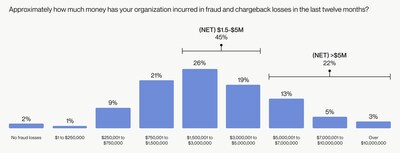
The impact of these fraud events also expanded in the last twelve months. Decision makers ranked losses due to goodwill credit to clients as the top reported consequence of fraud over the past year, and over one in five organizations (22%) reported losing over $5M in direct fraud losses. The true cost of fraud is likely even higher, as the majority (63%) of those surveyed reported that fraud losses are underreported.
"One of the biggest changes to the fraud landscape has been the adoption of AI to combat fraud," said Alloy Co-Founder and CEO Tommy Nicholas. "Bad actors are more sophisticated than ever, making the use of tools like AI table stakes in fraud prevention. In 2026, the distinction won't be who uses AI; it will be how—specifically how to anticipate attacks and identify risk the moment it enters the system."
Other key findings include:
AI is a driving factor in the rise of fraud:
- 91% of decision makers reported that more financial crimes are being committed with AI technology.
- In response, 82% of organizations stated they've increased their investment in AI-driven fraud prevention technologies.
Synthetic identity fraud is the most common type of fraud by case volume:
- 44% of respondents ranked synthetic identity fraud as the top fraud type tracked in their organization.
- 89% also ranked synthetic identity creation as the most concerning fraud tactic when it comes to tactics that are evolving with AI.
In addition to third-party fraud, first-party fraud and scams are rising threats for financial organizations:
- Fraud professionals attributed 36% of fraud events to organized fraud rings, 29% to customers intentionally stealing money from their financial institutions, and 29% to customers who were coerced or scammed.
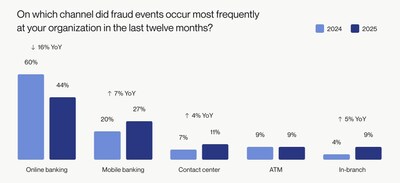
Online and mobile banking continue to be the most frequently targeted channels for fraud, although the frequency at which they are targeted shifted:
- Fraud in mobile banking rose by 7% year over year. Meanwhile, fraud in online banking saw a drop of 16%.
Fraud prevention requires significant investment from financial institutions, but has a positive ROI:
- 27% of organizations spend greater than 15% of their annual budget on fraud prevention; meanwhile,
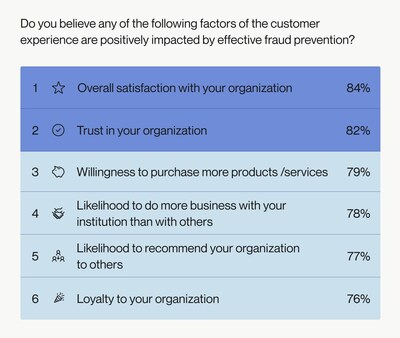
- 92% of decision makers report that their organization's fraud prevention efforts have helped them grow the business, and 84% reported that fraud prevention has resulted in higher rates of customer satisfaction.
"This year's report is a strong reminder that where there is money, there are bad actors looking for vulnerabilities to access it; and that those bad actors now have better tools than ever before," Nicholas said. "But it also illustrates how far the industry has advanced when it comes to managing those risks. Most organizations are no longer looking at fraud as a threat, they are also considering how managing it can unlock their goals to provide a better experience, offer more products and increase customer loyalty."
The 2026 State of Fraud Report is based on responses from over 500 decision-makers working in a director-level role or higher in the financial services industry across the enterprise banking, regional and community banking, credit union, and fintech sectors. The survey was conducted on behalf of Alloy by The Harris Poll, a global consulting and market research firm.
About Alloy
Alloy provides an identity and fraud prevention platform that enables global financial institutions and fintechs to manage identity risk so they can grow with confidence. Over 700 of the world's largest financial institutions and fintechs turn to Alloy's end-to-end platform to access actionable intelligence and the broadest network of data sources across the industry, as well as stay ahead of fraud, credit, and compliance risks. Founded in 2015, Alloy is powering the delivery of great financial products to more customers around the world. Learn more at alloy.com.
Media Contact:
Kylee Sibilia
Senior Communications Manager, Alloy
kylee@alloy.com

 View original content to download multimedia:https://www.prnewswire.com/news-releases/alloy-report-finds-fraud-rates-rose-for-67-financial-institutions-and-fintechs-22-lost-over-5m-to-fraud-in-2025-302636262.html
SOURCE Alloy
