
 Nasdaq
 华尔街日报
华尔街日报Gaia (NASDAQ:GAIA shareholders incur further losses as stock declines 14% this week, taking five-year losses to 68%
We think intelligent long term investing is the way to go. But along the way some stocks are going to perform badly. Zooming in on an example, the Gaia, Inc. (NASDAQ:GAIA) share price dropped 68% in the last half decade. We certainly feel for shareholders who bought near the top. And it's not just long term holders hurting, because the stock is down 44% in the last year. Shareholders have had an even rougher run lately, with the share price down 41% in the last 90 days. But this could be related to the weak market, which is down 22% in the same period.
Given the past week has been tough on shareholders, let's investigate the fundamentals and see what we can learn.
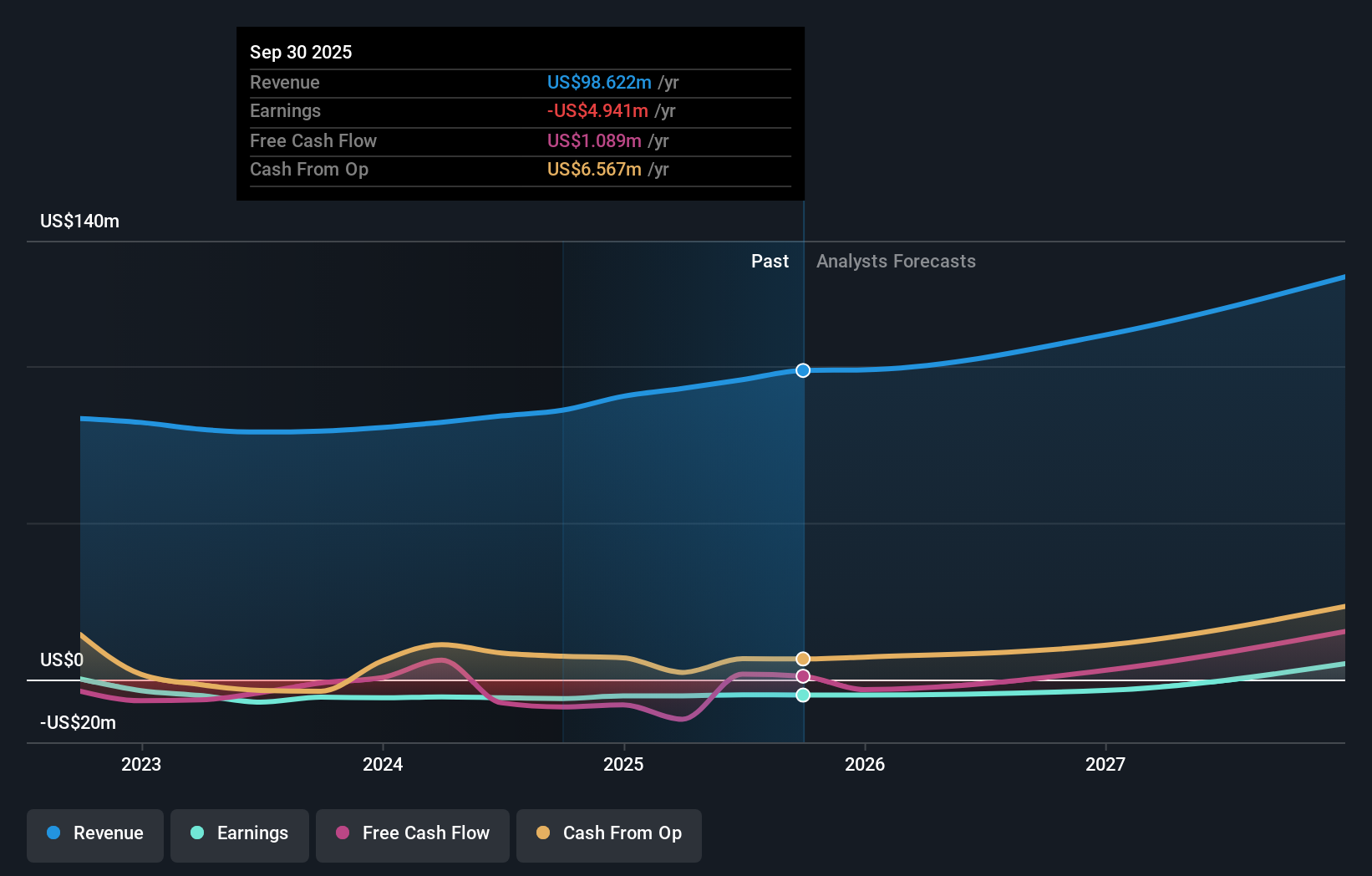
Given that Gaia didn't make a profit in the last twelve months, we'll focus on revenue growth to form a quick view of its business development. Shareholders of unprofitable companies usually desire strong revenue growth. Some companies are willing to postpone profitability to grow revenue faster, but in that case one would hope for good top-line growth to make up for the lack of earnings.
Over five years, Gaia grew its revenue at 6.1% per year. That's a fairly respectable growth rate. The share price, meanwhile, has fallen 11% compounded, over five years. It seems probably that the business has failed to live up to initial expectations. That could lead to an opportunity if the company is going to become profitable sooner rather than later.
You can see how earnings and revenue have changed over time in the image below (click on the chart to see the exact values).
Balance sheet strength is crucial. It might be well worthwhile taking a look at our free report on how its financial position has changed over time.
A Different Perspective
Although it hurts that Gaia returned a loss of 44% in the last twelve months, the broader market was actually worse, returning a loss of 91%. Unfortunately, last year's performance may indicate unresolved challenges, given that it's worse than the annualised loss of 11% over the last half decade. While some investors do well specializing in buying companies that are struggling (but nonetheless undervalued), don't forget that Buffett said that 'turnarounds seldom turn'. It's always interesting to track share price performance over the longer term. But to understand Gaia better, we need to consider many other factors. Consider risks, for instance. Every company has them, and we've spotted 1 warning sign for Gaia you should know about.
But note: Gaia may not be the best stock to buy. So take a peek at this free list of interesting companies with past earnings growth (and further growth forecast).
Please note, the market returns quoted in this article reflect the market weighted average returns of stocks that currently trade on American exchanges.
Have feedback on this article? Concerned about the content? Get in touch with us directly. Alternatively, email editorial-team (at) simplywallst.com.
This article by Simply Wall St is general in nature. We provide commentary based on historical data and analyst forecasts only using an unbiased methodology and our articles are not intended to be financial advice. It does not constitute a recommendation to buy or sell any stock, and does not take account of your objectives, or your financial situation. We aim to bring you long-term focused analysis driven by fundamental data. Note that our analysis may not factor in the latest price-sensitive company announcements or qualitative material. Simply Wall St has no position in any stocks mentioned.